
‘Nippon: Zaibatsu – Emperor Edition’ Board Game Review

Nippon: Zaibatsu – Emperor Edition is a fascinating case study in how to modernise a classic eurogame without losing the sharpness that made it so loved in the first place. The original Nippon was already a tightly wound economic engine‑builder with a distinctive worker‑selection mechanism, but Nippon: Zaibatsu is not a simple reprint with nicer pieces – it’s a complete re‑engineering of the system, with new resource types, revised ship mechanics, expanded factories, updated consolidation rules, and a fully integrated solo mode.
According to the new publisher at Crowd Games, “all the core mechanisms of the original Nippon are present, but the components, art, and design are upgraded, and many gameplay features are reworked to get the game in line with modern trends.” On balance, I agree with this, having played many games of Nippon on BoardGameArena and having felt the differences between the two games.
The premise of the two games remains the same: players control powerful zaibatsu – sprawling industrial conglomerates – during the Meiji era, competing to shape Japan’s rapidly modernising economy. You invest in industries, build factories, expand railroads, produce goods, and saturate regional markets for area control, all while managing timing, influence, and the pace of the game.
Nippon: Zaibatsu layers new strategic textures onto this familiar structure that would be hard to spot if you hadn’t played the original. Factories are now double‑sided to offer far more variability and provide new build paths to choose from. Ships have been heavily revised, with the Iwakura mission rules adding a more dynamic, interactive layer to overseas trade. Consolidation turns now provide new rewards and feel less like a complete pass, giving players more agency in how and when they reset their boards.
The heart of the game is still its distinctive worker‑selection system. Workers come in different colours, and taking actions by selecting them gradually fills your board with mismatched labour. When you consolidate, you pay money based on how many different colours you’ve accumulated – a mechanism that forces you to balance efficiency with long‑term planning. Nippon: Zaibatsu preserves this tension but smooths some of the rough edges.


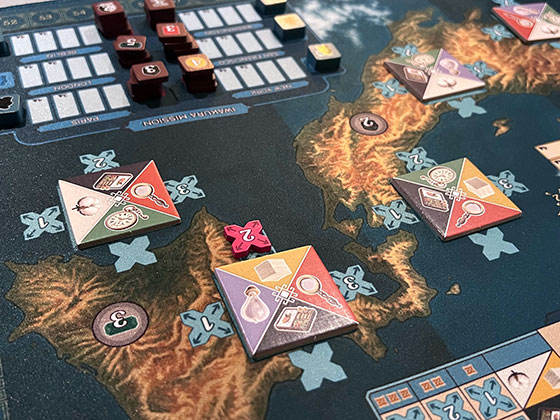
The action economy feels tighter and the incentives for doing certain things at certain times are clearer. Importantly, the new factory variability means that the worker colours you choose early on can meaningfully shape your industrial identity later. This is where Nippon: Zaibatsu‘s elegance shines: the rules are not complicated, but the consequences of each decision ripple outward in ways that reward careful sequencing.
Area majority remains central to scoring. Three times per game, players score based on their presence in regional markets and their ability to supply goods. This creates a constant push‑and‑pull between building your engine and projecting influence across the map. The Emperor Edition’s upgraded components (including heat‑printed wooden pieces and a custom organiser) make this spatial competition easier to parse and more satisfying to manipulate. The clarity of the new board layout and iconography also helps newer players grasp the flow of goods and influence, which was sometimes opaque in the original edition.
One of the most notable additions is the automa‑driven solo mode. Solo players now face a streamlined but challenging opponent that simulates competitive pressure without adding excessive upkeep. The automa does not alter the core rules; instead, it acts as a pacing and blocking force, pushing you to adapt your strategy as if you were playing against a human opponent. Early impressions of my one or two playthroughs highlighted how well this mode captured the tension of the multiplayer game, particularly in how it contests factories and markets.
What stands out most about Nippon: Zaibatsu is how it balances a lot of depth with an easygoing flow to the gameplay. The game is undeniably medium‑heavy – the BGG weight rating sits at 3.55/5 – but once players internalise the action structure, the turns move quickly. Much of the complexity comes not from rules overhead but from the density of meaningful choices.


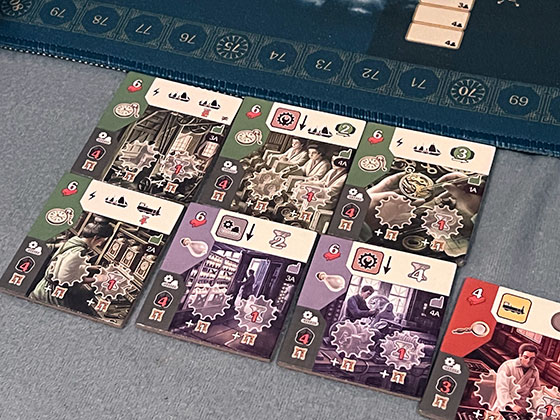
You are constantly adapting: factories come out of the market and are reset, commodity markets tighten, worker colours dry up, and the timing of consolidation becomes a weapon as much as a necessity. Several of the people I played with described the game as “elegant but crunchy” and that feels accurate. The Emperor Edition amplifies this quality by increasing variability without increasing rules load.
The pacing is also more dynamic than in many economic euros. Because players control when scoring happens – by triggering income rounds through Consolidation – the tempo of the game becomes a consideration in itself. You can accelerate the game to lock in early advantages or slow it down to build a late‑game engine. This flexibility gives each play a different rhythm, and Zaibatus’s expanded factory options (versus the original Nippon) make these tempo decisions even more impactful.
If there is a caveat, it’s that the teach remains fairly demanding. The interconnected systems – worker colours, consolidation costs, factory synergies, market scoring, contract fulfilment, and the revised ship rules – can overwhelm new players. But once the structure clicks, the game reveals itself as a remarkably smooth and intuitive economic puzzle. The Emperor Edition’s upgraded components and clearer graphic design help, but this is still a game that rewards repeated play and strategic exploration.
Ultimately, Nippon: Zaibatsu – Emperor Edition succeeds because it respects the original design while modernising it in a lot of ways that I didn’t realise might need it. The new factories, revised ships, expanded rewards, and polished solo mode all deepen the experience without bloating it to the point of excess.


The upgraded components in the Nippon: Zaibatsu make the game more inviting, but the basic edition of the new version are still a cut above 90% of the other games you might play today. Meanwhile, the increased variability ensures that no two plays feel the same. Nippon: Zaibatsu – Emperor Edition is a thoughtful, elegant re‑imagining of a modern classic – one that offers a rich, competitive, and highly replayable economic experience for players willing to invest in its depth.