‘Bus: Complete Edition’ Board Game Review

Bus: Complete Edition, designed by Jeroen Doumen and Joris Wiersinga and published by Splotter Spellen with a modern reissue from Capstone Games, is one of those rare board games that feels both timeless and singular. First released in 1999, it is often cited as the very first worker placement game, and even now, more than two decades later, it remains a masterclass in how simple rules can generate extraordinary depth, tension, and interaction. The Complete Edition brings the game back with upgraded production, but the core design is untouched – a testament to how well it has aged.
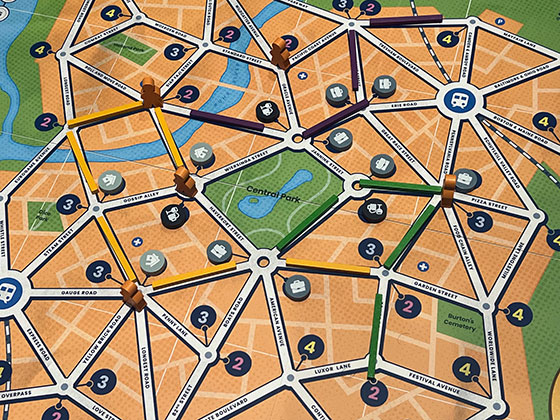
The premise is deceptively straightforward. Players are bus companies competing to transport passengers around a growing city. Each round, passengers want to go to one of three destinations – home, work, or the pub – as indicated by the clock on the board. Players expand their routes, add buildings, bring in new passengers, and run their buses to deliver them. Every passenger delivered is worth a single victory point, and in a game where winning scores often hover around 7–14 points, every move matters.
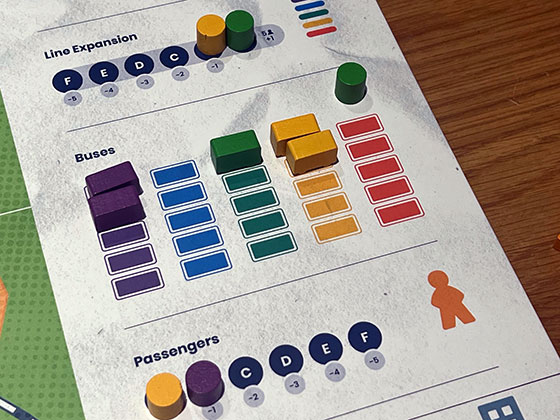
The genius of Bus lies in its worker placement system. Each player begins with a fixed pool of action markers that must last the entire game. You can spend as many as you like in a round, but once they’re gone, they’re gone. This creates a constant tension between pacing yourself and seizing opportunities. The order of execution adds another layer: some actions resolve in reverse order, meaning the first player to choose them acts last. This leads to delicious games of chicken, where timing and bluffing are as important as efficiency.
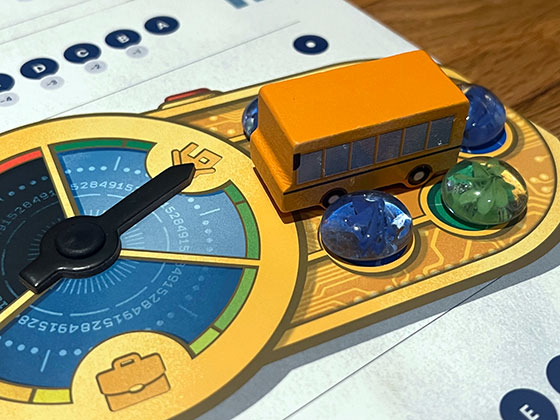
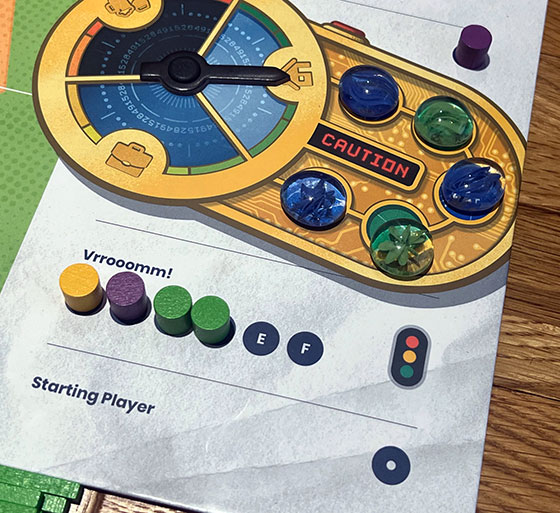
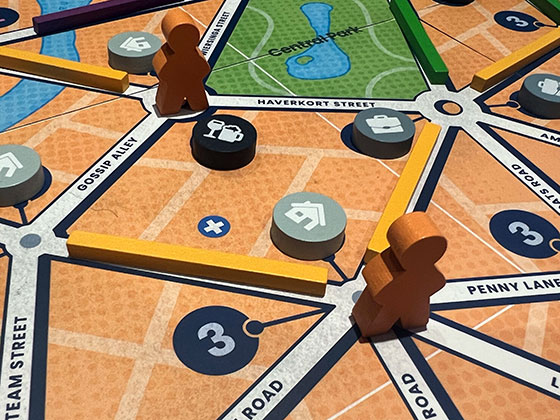
Route building is similarly sharp. You can only extend your line at its ends, which makes blocking opponents both simple and brutal. Building placement is equally interactive: you can add destinations that benefit your own routes, or sabotage rivals by placing irrelevant buildings along theirs. And then there’s the infamous clock action – the ability to stop time. By choosing this, you can prevent the clock from advancing, forcing passengers to stay at their current destination – or changing it to suit you. It’s disruptive, powerful, and costly, since each use earns you a negative point. Yet in a tight game, the threat of stopping time can be as impactful as actually doing it.
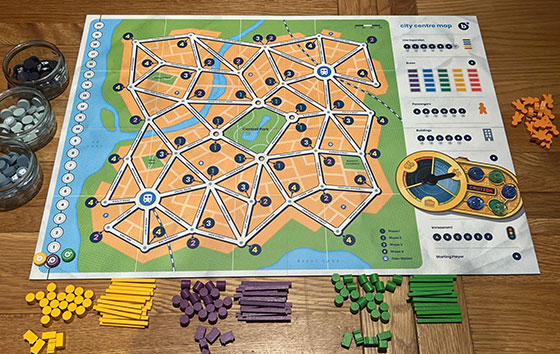
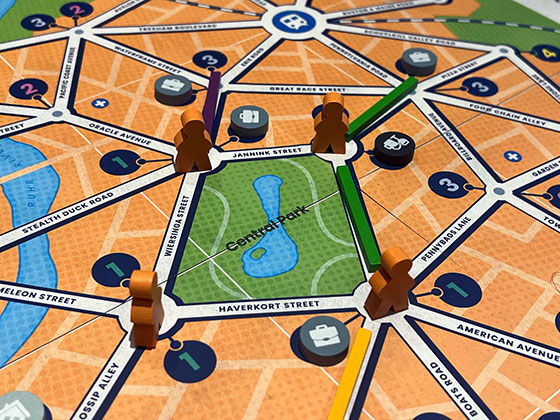
What makes Bus so enduring is how much player interaction it packs into such a lean ruleset. There is no luck, no hidden information, no randomness. Everything is open, and every decision is contested. It feels less like a puzzle and more like a knife fight in a phone booth, where every move cuts into someone else’s plan. The result is a game that thrives on table talk, laughter, and frustration, as players gleefully sabotage each other while trying to eke out a point.
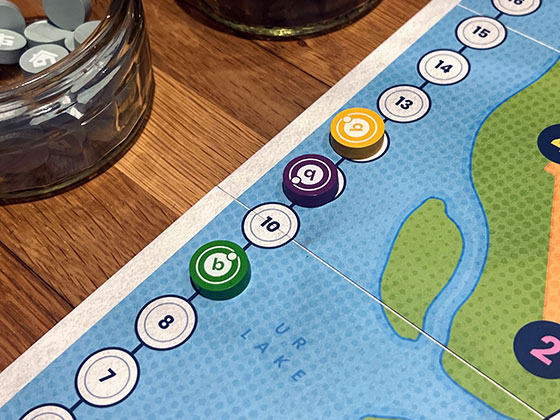
Bus: The Complete Edition from Capstone Games elevates the production without changing the gameplay. The board is clearer, the components upgraded to wooden pieces, and the time stones remain as lovely glass beads. The collector’s edition even includes both the original artwork and the new design, plus an art book chronicling the game’s history, although you’ll be lucky to find it. While the rulebook’s fold-out map format has been (rightly) criticized for usability, the overall presentation is a significant improvement over the original’s spartan look.
Replayability is high, not because of variable setups, but because of the sheer dynamism of player interaction. Every game unfolds differently depending on how players pace their actions, place buildings, and threaten to stop time. It’s easy to teach – you can explain the goal in a sentence – but hard to master, with layers of strategy that only reveal themselves after repeated plays. I can see why many people consider Bus to be the epitome of Splotter Spellen game design – thanks to the incredibly simple yet compelling design.
For me, Bus is one of those rare designs that feels both ruthless and elegant. It’s not about building the most efficient network in isolation; it’s about constantly reacting to and disrupting your opponents. It’s a game where every point is hard-earned, every decision matters, and every laugh comes at someone else’s expense. This interaction (which is often passive-aggressive) isn’t for everyone, but it certainly makes you stop and think about what you’re doing.
The game’s longevity is remarkable, and even at almost 20 years old, Bus feels fresher and sharper than countless modern Euros that seem to layer in complex systems because they are not clever enough to achieve more by using less. Bus‘s minimalism is part of its strength: there are no extraneous mechanics, no padded scoring systems, no luck to soften the blows. Every choice is direct, and every consequence immediate. This makes it punishing, but also exhilarating. You never feel like you’re playing against the system; you’re playing against the people at the table.
The infamous time mechanic deserves special mention. Stopping time is one of the most unusual actions in board gaming, and it encapsulates the spirit of Bus. It’s risky, it’s thematic, and it’s deeply interactive. Using it at the right moment can swing the game, but overusing it will cost you dearly. It’s the kind of mechanic that makes players laugh, groan, and argue, and it ensures that Bus always has memorable moments. It can also end the game, with the fifth time stone signalling an immediate closure to proceedings.
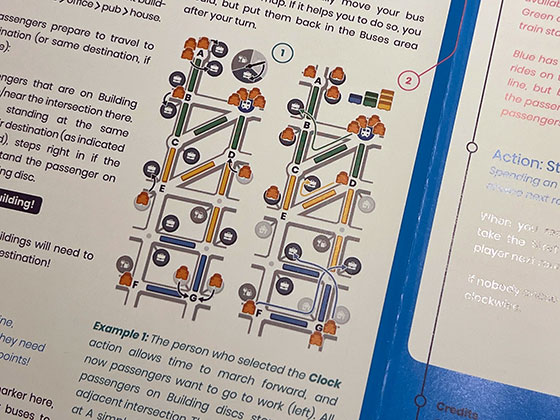
In terms of accessibility, Bus is surprisingly approachable. The rules are short, and the core loop is easy to grasp. The difficulty comes not from complexity, but from the intensity of interaction. New players may find themselves blocked or sabotaged, but the game is short enough that frustration never lingers. Experienced players, meanwhile, will revel in the layers of bluffing and brinkmanship.
Bus: Complete Edition is a brilliant piece of design, still fresh after more than 20 years. It’s easy to see why it remains a cornerstone of Splotter’s catalogue and why so many players consider it one of the best interactive Euros ever made. If you want a game that strips worker placement down to its essence and then sharpens it into a weapon, don’t miss the bus.