‘Gloomhaven: Second Edition’ Board Game Review

Gloomhaven: Second Edition is a comprehensive overhaul of the original game, featuring rebalanced classes, redesigned scenarios, streamlined rules, improved component quality, and a more immersive narrative structure. It preserves the core tactical gameplay while refining nearly every aspect for clarity, accessibility, and long-term replayability.
When Gloomhaven first launched in 2017, it redefined what a dungeon-crawling board game could be. With its sprawling campaign, tactical combat, legacy mechanics, and deep character progression, it became a genre-defining experience. Now, in 2025, Gloomhaven: Second Edition arrives as a full-scale revision—not just a reprint, but a thoughtful reimagining of the original. Designer Isaac Childres and Cephalofair Games have taken years of feedback, playtesting, and community insight to deliver a version that’s tighter, clearer, and more rewarding.
The most immediate change is the component quality. The Second Edition features upgraded miniatures for all mercenaries and bosses, replacing the standees of the original. These miniatures are detailed, durable, and add a tactile richness to the game’s visual presentation. The map tiles have been redesigned with sharper artwork and more consistent iconography, making dungeon layouts easier to parse. I will admit that I was a bit surprised to see map tiles still in Gloomhaven: Second Edition, as I felt that Cephalofair might move more towards the scenario books used in Gloomhaven: Jaws of the Lion. This means that Second Edition is still a beast of a box, and a lot to set up from game to game.
The rulebook and scenario guide have been completely rewritten. The original game, while groundbreaking, was often criticised for its dense and sometimes ambiguous rules. Gloomhaven: Second Edition addresses this with a reorganised rulebook that includes clearer examples, better indexing, and more intuitive formatting. A separate Learn to Play guide walks new players through the first few scenarios, easing the onboarding process. The FAQ and errata from the original game have been fully integrated, eliminating confusion and streamlining gameplay.


One of the most impactful changes is the rebalancing of mercenary classes. All 17 original classes have been revisited, with tweaks to card abilities, perk systems, and progression curves. Some classes that previously felt underpowered or overly situational – such as the Mindthief or the Scoundrel – have received meaningful buffs or reworks. Others, like the Cragheart and Spellweaver, have had their power curves smoothed to avoid early-game dominance or late-game stagnation. These changes make each class more viable across a broader range of scenarios and party compositions.
The item system has also been overhauled. In the original game, certain items were either too powerful or too situational, leading to imbalance or disuse. Gloomhaven: Second Edition introduces a revised item deck with better scaling, clearer effects, and more meaningful choices. Consumables are more impactful, and persistent items have been adjusted to avoid trivialising combat. The shop interface has been improved, and item availability now scales more naturally with campaign progression.
Scenario design has seen a major upgrade. While the original Gloomhaven featured 95 scenarios, many were criticised for repetitive objectives or unclear win conditions. The Second Edition retains the same number of scenarios but redesigns over 30% of them, introducing more varied objectives, better pacing, and improved enemy placement. Boss fights are more dynamic, puzzle scenarios are more intuitive, and the overall campaign flow has been refined to reduce backtracking and dead ends.
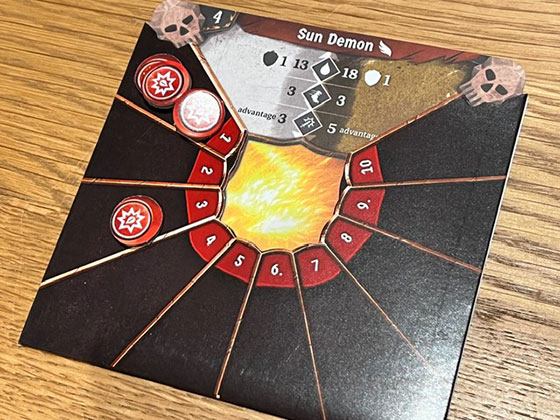
The enemy AI and monster abilities have been clarified and rebalanced. Monster behaviour is now easier to interpret, with updated ability cards and clearer targeting rules. Some enemy types have been reworked to reduce frustration – such as ranged enemies that previously clustered in corners or flying enemies that ignored terrain too easily. Elite monsters now pose a more consistent challenge, and status effects have been adjusted for better synergy across classes.


Narrative presentation has also evolved. Gloomhaven: Second Edition features newly written story text, with improved prose, better character development, and more immersive world-building. The branching campaign structure remains intact, but choices now feel more consequential, and the city events and road events have been rewritten to reflect a more cohesive tone. The game’s lore is more accessible, and the motivations of factions and characters are better articulated.
One of the most requested features, scenario replayability, has been addressed through a new system of modular objectives and adaptive difficulty. Certain scenarios now include alternate win conditions or optional challenges, allowing players to revisit them with different party compositions or goals. This adds longevity to the campaign and encourages experimentation.
The legacy mechanics – retiring characters, unlocking new classes, modifying the map – remain central to the experience, but have been refined for clarity. The sticker system is now optional, with reusable map overlays and a digital tracking app available for players who prefer a non-destructive campaign. The prosperity system has been rebalanced to better reflect player progress, and reputation now plays a more meaningful role in unlocking content.
Accessibility has been a major focus. Gloomhaven: Second Edition includes colourblind-friendly iconography, improved font readability, and clearer contrast across components. The game also introduces difficulty scaling options, allowing players to adjust enemy strength and scenario complexity based on experience level or party size. Solo play has been streamlined, with clearer rules for controlling multiple characters and managing enemy AI.


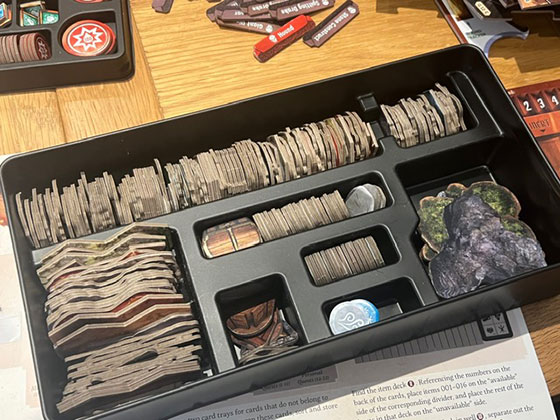
The box insert and storage system have been redesigned from the ground up. The original game’s sprawling components were notoriously difficult to organise. Gloomhaven: Second Edition includes a custom insert with labelled compartments for cards, tokens, miniatures, and map books. Setup and teardown are significantly faster, and the game is easier to store and transport. The box itself is sturdier and more compact, despite containing more content.
Digital integration has also improved. Cephalofair now supports the Second Edition with a companion app that tracks campaign progress, manages character sheets, and automates enemy behaviour. This reduces bookkeeping and allows players to focus on tactical decisions and story immersion. The app is optional but highly recommended, especially for larger groups or remote play.
For returning players, the question is whether Gloomhaven: Second Edition justifies a full repurchase. Based on the scope of changes, the answer is a resounding “maybe.” This is not just a cosmetic update – it’s a systemic refinement that addresses nearly every pain point of the original while preserving its strengths, but it is still broadly the same game. The tactical combat is still deep and rewarding, the character progression is still rich and varied, and the campaign still offers dozens of hours of content. But now, it’s all more accessible, more balanced, and more enjoyable.
For new players, the Second Edition is the definitive way to experience Gloomhaven. It’s easier to learn, smoother to play, and more visually engaging. The onboarding tools, revised rulebook, and improved scenario design make it far less intimidating than its predecessor, without sacrificing depth.



Ultimately, Gloomhaven: Second Edition is a masterful revision of a modern classic. It retains the soul of the original while refining its mechanics, presentation, and accessibility. Whether you’re a veteran looking to revisit the city with fresh eyes or a newcomer ready to dive into one of the most ambitious board games ever made, this edition delivers. That said, if the original game was simply “too much” for you, then nothing has changed there. Instead, I’d certainly still recommend the smaller, simpler (but still massively impressive) Gloomhaven: Jaws of the Lion.