
‘Escape From Stalingrad Z’ Board Game Review

Whilst a few video games have mixed World War II with occult themes, not least the likes of Achtung! Cthulhu and even Call of Duty: Zombies, I feel this is an underused idea. Thankfully, Escape From Stalingrad Z leans into that premise with grim determination. Designed by Marco Pecota and released by Raybox Games, this is a tactical, narrative-driven campaign game set against the backdrop of the infamous Battle of Stalingrad – only this time, the dead don’t stay dead. It’s a game that blends skirmish combat, branching storylines, and a compact, book-based presentation to deliver a solo or cooperative experience that’s as tense as it is atmospheric.
At its core, Escape From Stalingrad Z is a 1–3 player game, but it’s clear from the outset that it’s been designed with solo play in mind. The AI system for zombies is simple and effective, and the storybook format makes setup and teardown a breeze. Each scenario is presented as a one to two-page spread in a spiral-bound book, which doubles as the game board. This clever design choice means that the game requires very little table space – just the open book, your character sheets, and a handful of tokens or miniatures. It’s a format that feels tailor-made for solo players, and it’s one of the game’s most distinctive features.
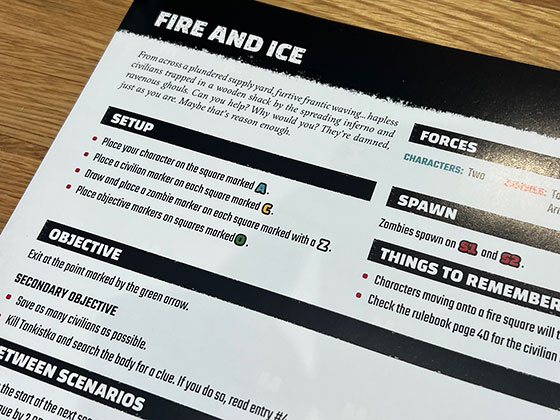
The storybook presentation isn’t just a gimmick – it’s a functional and thematic triumph. Each mission unfolds across a beautifully illustrated map, with terrain features, spawn points, and objectives printed directly onto the page. The accompanying scenario text sets the tone, introduces new rules, and outlines the stakes. As you progress through the campaign, your choices affect future missions, creating a branching narrative that rewards careful planning and risk management. It’s a “create your own adventure” system that feels organic and immersive, and it’s one of the reasons the game stands out in a crowded field of zombie-themed titles.
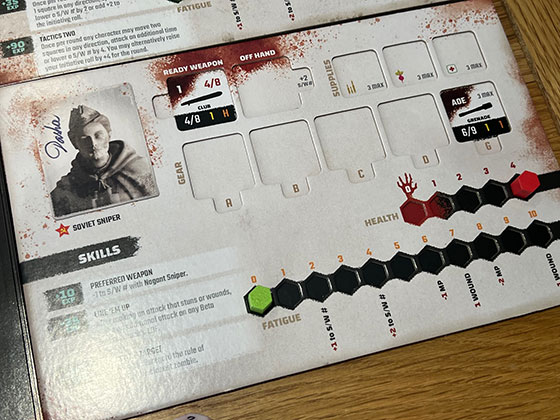
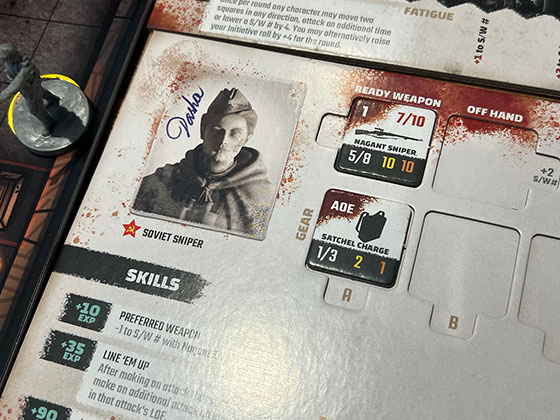
Gameplay is fast-paced and tactical. Each character has a unique set of stats and abilities, and players must navigate tight corridors, ruined buildings, and open streets while managing limited resources and facing relentless undead threats. Combat is resolved using dice, with modifiers based on weapons, positioning, movement that turn, and character traits. The game uses twelve-sided dice, which adds a bit of swing to the outcomes, but the system is intuitive and easy to learn. Scenarios typically take 20–40 minutes to complete, making it easy to fit a session into a lunch break or evening slot.

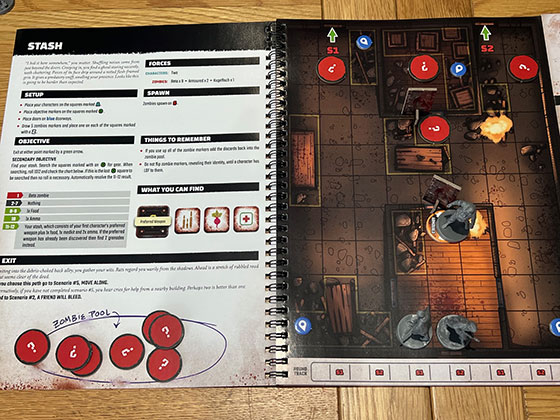
One of the most interesting aspects of Escape From Stalingrad Z is its dual-edition release. The standard edition uses cardboard tokens to represent characters, zombies, and terrain features. These tokens are well-printed and functional, and they contribute to the game’s portability. For players who value compactness and ease of setup, the standard edition is a solid choice. It’s also more affordable, making it an attractive option for those who want the full experience without the premium price tag.
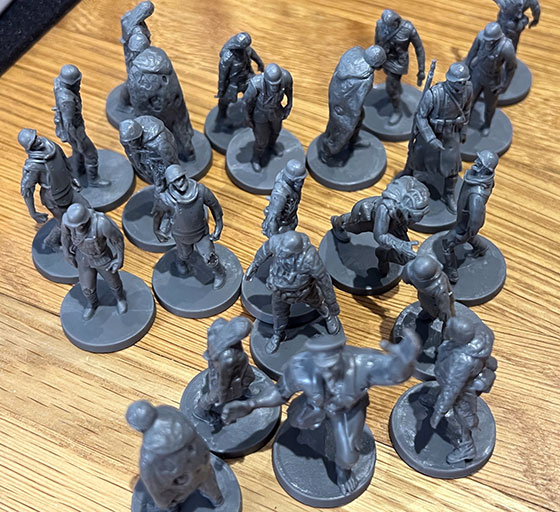
Then there’s the deluxe edition that we were sent – and it’s a beauty. This version replaces the tokens with detailed plastic miniatures, including hero characters and a variety of zombie types. The sculpts are excellent, with dynamic poses and grim detail that bring the horror of Stalingrad to life. The deluxe set also includes a custom ammo box-style sleeve, bonus characters, and stretch goal content that expands the game’s scope and replayability. It’s a significant upgrade in terms of table presence and tactile satisfaction, but it comes at a steep cost. For some, the price may be hard to justify, especially when the core gameplay remains unchanged.
Interestingly, there’s a case to be made for the standard edition beyond just cost. Old-school gamers – those who cut their teeth on hex-and-counter wargames – may actually prefer the token-based presentation. It’s cleaner, more compact, and arguably more in keeping with the game’s roots in tactical combat. The storybook format, combined with tokens, makes Escape From Stalingrad Z one of the most portable campaign games of this weight on the market. It’s easy to toss into a bag, set up in minutes, and play anywhere with a flat surface. That kind of accessibility is rare, and it’s a big part of the game’s appeal.
Thematically, the game is steeped in atmosphere. The setting – Stalingrad, winter 1942 – is one of the bleakest and most iconic battlefields of the Second World War. The addition of zombies doesn’t detract from the historical weight; instead, it amplifies the horror. The undead are not just cannon fodder; they’re a relentless, evolving threat that forces players to adapt and improvise. The narrative is grim and evocative, with characters facing impossible odds and moral dilemmas. It’s not a game about heroism, it’s a game about survival, and it’s bloody tough too!


Designer Marco Pecota has spoken about his desire to create a game that blends cinematic storytelling with tactical depth. His background in film and design is evident throughout the game, from the layout of the scenario book to the pacing of the missions. Each chapter feels like a scene from a gritty war movie, with moments of tension, desperation, and fleeting triumph. The writing is fairly brief but tight and effective, and the branching paths offer meaningful choices without overwhelming complexity.
Mechanically, the game is streamlined but satisfying. Movement and combat are straightforward, with modifiers for terrain, line of sight, and weapon types. Characters can scavenge for supplies, interact with objectives, and use special abilities to turn the tide. The zombie AI is simple but effective, with different types of undead presenting unique challenges. Some are fast, some are tough, and some explode on death, forcing players to think carefully about positioning and timing. The game doesn’t bog down in rules, but it offers enough depth to keep players engaged across multiple scenarios.
Replayability is solid, especially with the branching campaign structure. There are about forty linked scenarios, and while some paths converge, others diverge significantly based on player choices. The inclusion of multiple characters, each with distinct abilities, adds variety, and the modular nature of the storybook means that expansions or alternate campaigns could easily be added in future releases. The game also supports versus modes, with one player taking on the role of the Zombie Master – although we didn’t try this. While the game shines brightest in solo play, the two-player co-op mode is well-balanced and enjoyable, and moves at a decent pace.
If there’s a downside to Escape From Stalingrad Z, it’s that the game’s presentation may not appeal to everyone. The art style is gritty and functional rather than flashy, and the storybook format, while clever, lacks the tactile engagement of a traditional board. The deluxe edition addresses this with miniatures and upgraded components, but the price jump is significant. Additionally, while the game is easy to learn, it can be punishing—players who make poor choices early on may find themselves in unwinnable situations all too quickly. That’s part of the thematic experience, but it may frustrate those looking for a more forgiving ride (for example, such as those offered by Zombicide).

In conclusion, Escape From Stalingrad Z is a bold and inventive game that delivers a compelling solo and cooperative experience. Its storybook presentation, streamlined mechanics, and atmospheric setting make it a standout in the crowded field of zombie-themed games. Whether you opt for the portable, budget-friendly standard edition or the lavish deluxe version with its impressive miniatures, you’re getting a game that respects your time, challenges your tactics, and immerses you in a world of grim survival. It’s not for the faint of heart, but for those willing to brave the horrors of Stalingrad, it’s a journey worth taking.