“Punishing” Games: Genre Explained
Casual video games, regular games, hard games—all of that is in the normal spectrum of gaming. Closer to the border of this spectrum, there are the so-called punishing games: an evil design where the consequences for failure are severe, often setting the player back significantly in terms of time, progress, or resources. This is the #1 choice of “real” and hardcore gamers who use the maximum of their brains to crack a code or are just too good at persisting in challenges (even if it’s debatable if it was worth it).
Let’s unveil the unique and horrible world of punishing games together! You will either get great suggestions on what to try or obtain a list of games to never add to your Steam cart.
How Difficult Games Use Punishments
Examples will be better than any technical explanation!
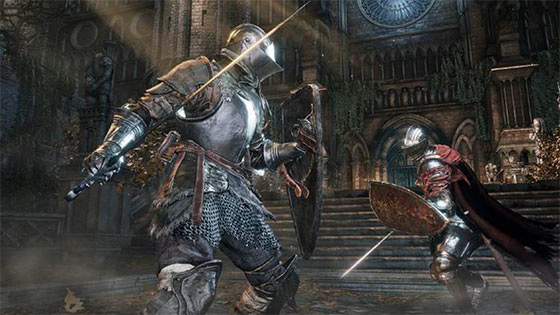
Dark Souls, the #1 choice of many players who love horror (the horror is the game’s difficulty) has many ways of bullying its players. It requires strategising, a lot of skill, good stress tolerance, and learning about random items to progress; despite being one of those rage games, it’s fair – you only die when you’re too reckless. Moreover, you respawn and can tryhard your way to a boss again or influence progression with a new approach, levelling up, or extra exploration.
In turn, Chicken Road 2, a much simpler game about just helping a chicken cross a dangerous highway, is even more punishing: one wrong step, and you’re dead and lose ALL the progress, after which you must start again at the beginning of a road. Predicting when you die is also impossible because of its merciless RNG.
But where is the line between hard games and punishing ones? We can contrast! A game like Celeste is very difficult but not punishing, because you’re revived instantly at the start of the room. Conversely, a game like Getting Over It has simple controls but is highly punishing, because one mistake can send you back to the start of the game.
Subgenres of Punishing Games and Suggestions
There are at least 3 “schools” of design. Let’s start with the most normal one and proceed to the psychotic subgenres.
Soulslikes: Mostly Punishing, But Generally Fair
Pioneered by FromSoftware’s Dark Souls series, these games use “punishment” as a teaching tool. When you die, you lose your “Souls” (currency/XP) at the spot where you fell. You have one chance to run back and retrieve them; if you die again before reaching them, they are gone forever. The punishment thus forces the player to slow down, learn enemy patterns, and treat every encounter with respect. Some more examples!
- By FromSoftware: Demon Souls, Sekiro: Shadows Die Twice, Bloodborne.
- Lies of P: a complex dark-fantasy soulslike with quite similar mechanics to DS.
- Hollow Knight and Silksong: 2D platforming-fighting games focused on beating increasingly hard bosses and exploring for better equipment or skills.
- Fear and Hunger and Termina (called Funger by the fans): roguelike games with limited options to save your progress and turn-based combat that’s complexified with coin flips (fail a coin flip → die in 80% of cases).
In all those games, you still have 70% control over your progress. Even if you die, you can take your time to become overpowered, find secret boosts or better loot, and even “deceive” these games in some aspects. They give you instant serotonin when you win a battle!
Foddian Games, aka Rage Games
Named after Bennett Foddy, creator of several EVIL (and philosophical) punishing games, these are usually physics-based vertical platformers. The goal is simply to climb in some way, but the terrain is designed so that if you miss a jump or stop for too long, you might tumble all the way down to the starting area. Obviously, your path to the top is also horrible and not player-friendly: the obstacles get only more insane. Examples!
- Getting Over It with Bennett Foddy — classic (it ruined people).
- A Difficult Game About Climbing — understandable concept.
- Pushing It! With Sisyphus — “just” push a boulder up a hill.
Unlike Dark Souls, Lies of P, Hollow Knight, Funger, etc., Foddian games are less popular with regular players and are mostly choices of streamers because punishments here trigger high-drama reactions.
Masocore (It Stands for Masochistic + Hardcore)
This genre is characterised by “unfair” or hidden traps that kill the player instantly, requiring trial-and-error and rote memorisation to progress. The system is literally a puzzle of memory and extreme precision. It’s quite a misunderstood corner of gaming, despite some epic projects like:
- Kaizo Mario World (2007): A ROM hack of Super Mario World created by T. Takemoto. It introduced the infamous “Kaizo Block”—an invisible block placed exactly where a player is most likely to jump, causing them to fall to their death.
- I Wanna Be the Guy (2007): Created by Michael “Kayin” O’Reilly, this game is a “sardonic love letter” to the 8-bit era. It’s famous for its “postmodern” design—it knows you know how video games work, and it uses that knowledge against you (e.g., a delicious-looking cherry that falls up to kill you).
- Syobon Action / Cat Mario (2007): A Japanese parody of Super Mario Bros. that takes “unfairness” to a comedic level. It’s designed to be a “prank” on the player, featuring floor tiles that disappear or clouds that suddenly sprout spikes. To prevent the game from being literally unplayable, most Masocore games offer infinite lives and instant respawns. The “punishment” is the death animation itself, not the loss of progress. It’s still super stressful.
Why Do People Even Play These Games?
To an observer, someone playing a punishing game looks like they are having a terrible time – they might be shouting, gripping the controller white-knuckled, or staring at a “Game Over” screen for the hundredth time. In reality, many people who love punishing games grew up in the 80-90s and feel that modern games “treat players like children” with glowing objective markers and regenerating health. For these players, a punishing game is a sign of respect from the developer—the game is assuming the player is smart and capable enough to figure it out without help. Will you try to conquer such a challenge as well?