‘7 Wonders Dice’ Board Game Review
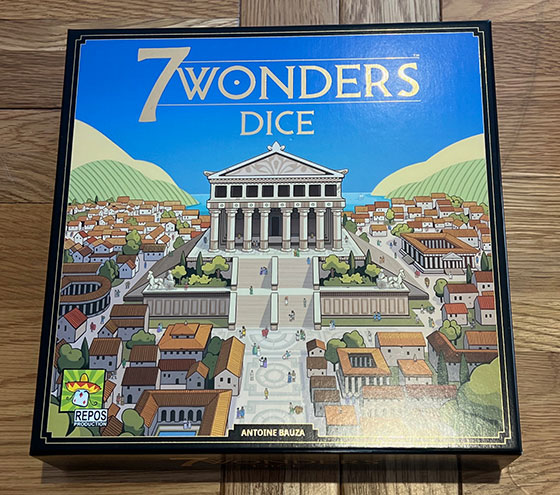
Civilisation has always been a balancing act between planning and chance. In 7 Wonders, Antoine Bauza gave us a world of careful drafting, where every card was a deliberate step in shaping history. In 7 Wonders Dice, he asks a different question: what if the fate of your city rested on the roll of a die?
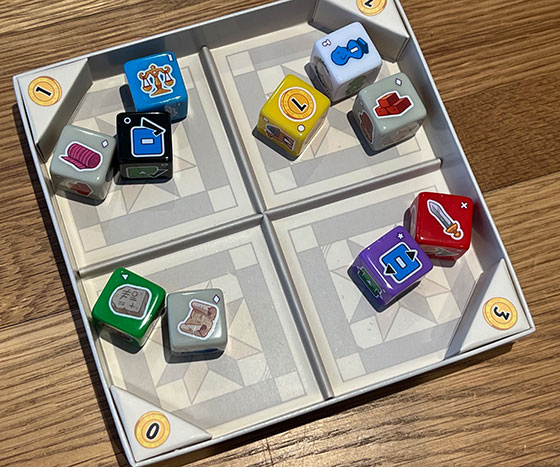
From the first turn, the difference is palpable. Instead of a hand of cards, you clutch a pool of chunky custom dice, each face promising resources, science, military, or civic development. Roll them, and you’re faced with a puzzle: do you funnel stone into your wonder, push for military dominance against your neighbours, or chase the elusive scientific sets that snowball into big points? The rhythm is faster, the choices more immediate, and yet the DNA of 7 Wonders Dice is unmistakably present here.
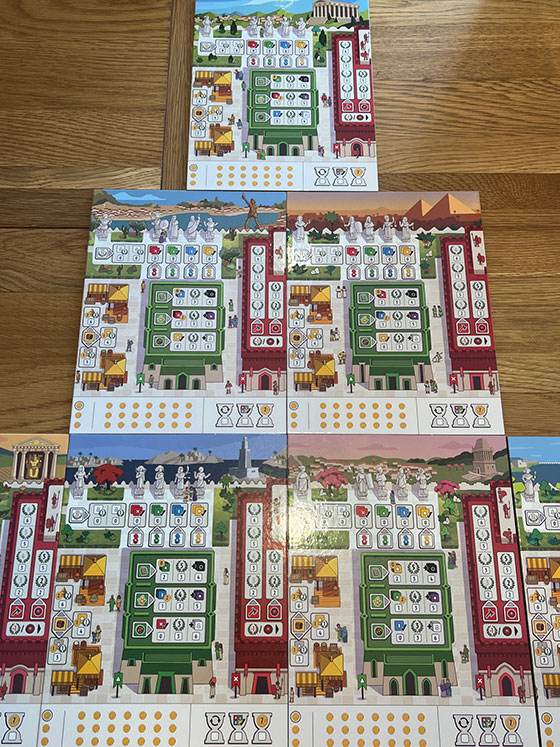
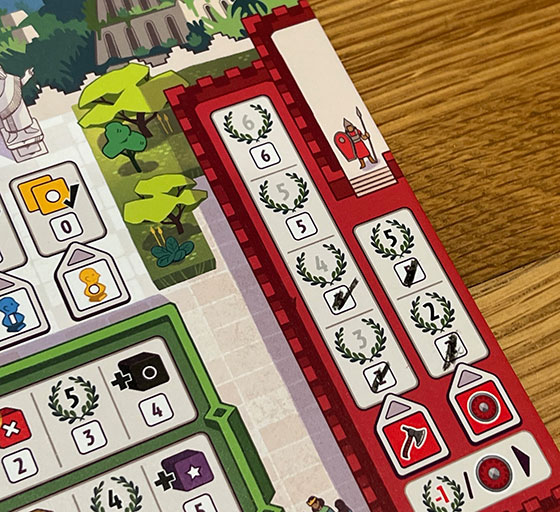
As always with a Repos Productions game, the components are excellent. The dice are chunky and brightly printed, whilst the dice box they come in has a sturdy base and lid, with four ridges inside that cause the dice to roll when the box is shaken. The civilisation boards are double or even triple-thick folded card, and the artwork and iconography are blended perfectly to create the theme.
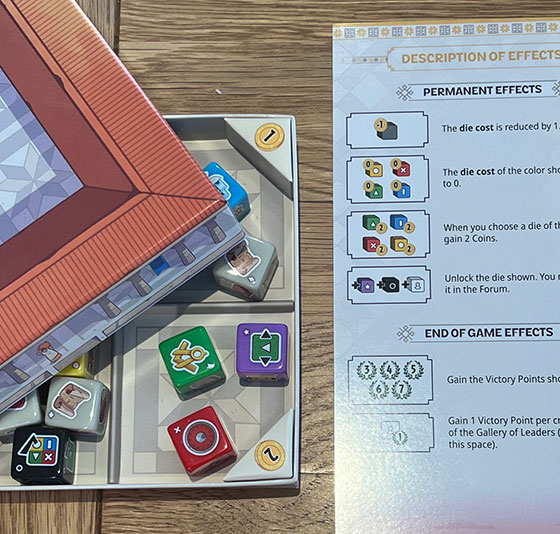
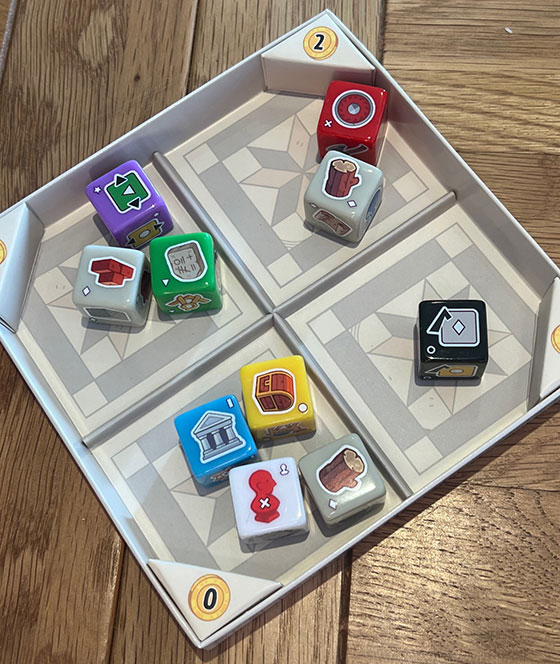
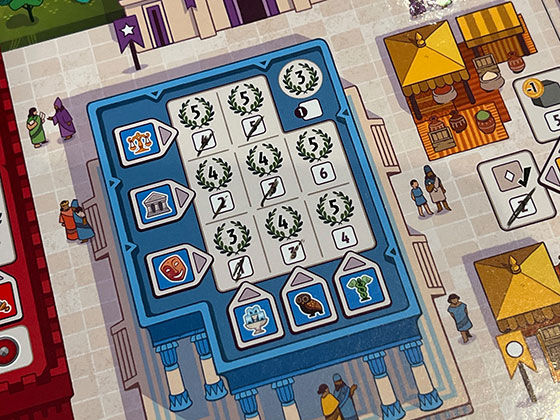
The upgrade system is where 7 Wonders Dice really sings. Starting dice are modest, but as you invest in structures, you’ll unlock stronger dice with more potent faces and, in doing so, remove weaker ones from the shared pool. This creates a satisfying arc: your city evolves not just in what you build, but in the very dice you roll, and if other players lack the buildings to trigger the upgraded dice? That’s on them. It’s a clever abstraction of technological progress, and it keeps the game feeling dynamic across its short playtime.
Interaction remains central. Military comparisons still hinge on your left and right neighbours, and ignoring them can be costly because there are big points for an opponent who can attack your undefended flank. Science symbols create races that feel tense and rewarding, while civic structures offer steady points for those who prefer consistency. The wonders themselves are varied, each offering unique costs and scoring opportunities, ensuring replay value as players look to try different boards.
And yet, dice are dice. Luck is ever-present, and while upgrades mitigate it somewhat, there are moments when a strategy falters under poor rolls. Compared to the layered precision of card drafting, 7 Wonders Dice feels breezier, less epic in scope and certainly quite a bit less strategic. It’s closer in spirit to many roll-and-write games than to its own parent game, though it retains the familiar scaffolding of resource management and neighbourly tension.
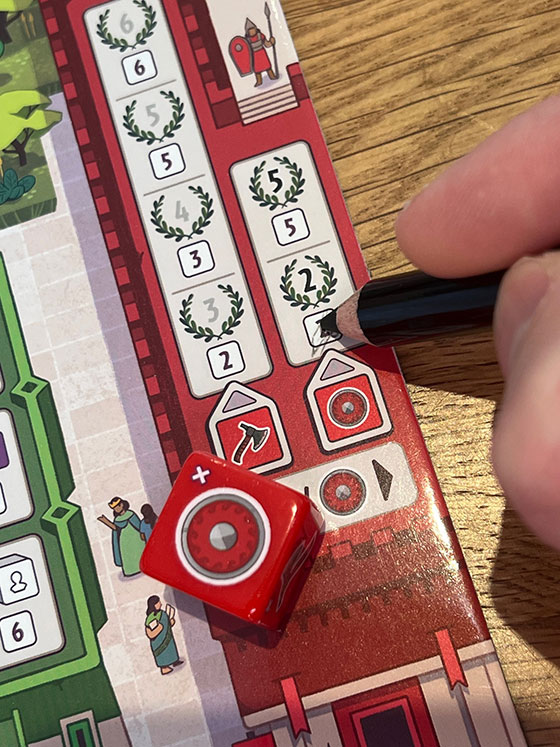
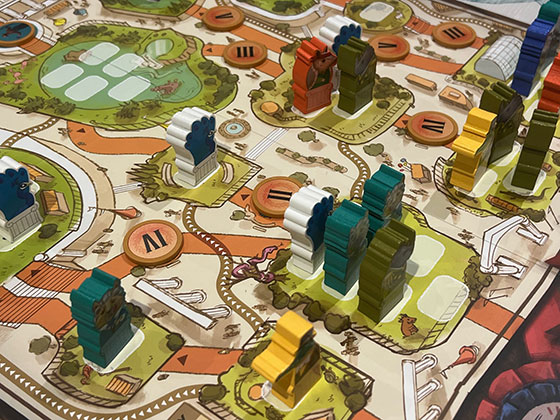
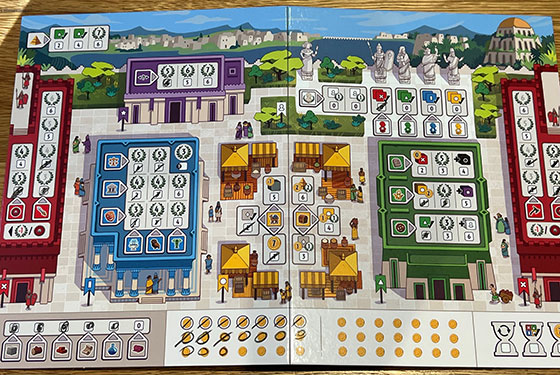
Thematic immersion is lighter, too. Where 7 Wonders felt like building a sprawling civilisation, 7 Wonders Dice feels more abstract – you’re shaping probabilities rather than drafting history. That said, the tactile joy of shaking the dice box, combined with the quick setup and teachability, makes it a superb gateway into the universe. Families and casual groups will find it approachable, while veterans may enjoy it as a filler between heavier titles.
Visually, 7 Wonders Dice carries the familiar iconography and wonder boards, ensuring continuity with the series. Table presence is strong, though not as striking as a tableau of cards. Accessibility is excellent: rules are digestible, playtime sits comfortably at 25–30 minutes, and the dice system is intuitive even for newcomers.
7 Wonders Dice is not a replacement for 7 Wonders, nor does it aspire to be. It’s a clever reimagining – a shorter, punchier sibling that thrives on immediacy. For newcomers, it’s perhaps the most approachable entry point into the series. For veterans, it’s a welcome filler that distils the essence of civilisation-building into half an hour of dice-chucking fun. It asks us to embrace chance, and in doing so, it offers a grin, a handful of dice, and a reminder that history is never entirely under our control.