
‘Alma and the Wolf’ VOD Review
Stars: Ethan Embry, Li Jun Li, Jeremie Harris, Lukas Jann, Kevin Allison, Mather Zickel, Dana Millican, Beth Malone, Alexandra Doke, Scotch Hopkins | Written by Abby Miller | Directed by Michael Patrick Jean
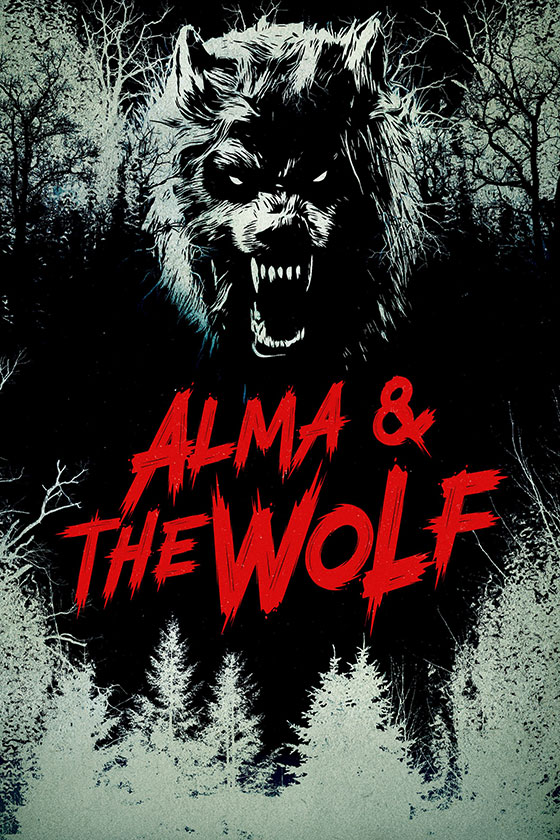
Alma and the Wolf is a strange, brooding, and at times hauntingly beautiful entry into the psychological horror genre—one that leans more on existential dread than jump scares, more on metaphor than literalism. Directed by Michael Patrick Jean, it’s a film that revels in ambiguity and surrealism, presenting a fragmented tale of grief, trauma, and mental unravelling masquerading as a werewolf mystery. For better or worse, it demands patience and interpretation.
Set in a sleepy, undefined American town, the story follows Ren, a down-on-his-luck policeman whose life is already teetering on collapse. Estranged from his son, drinking too much, and clearly haunted by past mistakes, Ren is pulled deeper into the woods – literally and metaphorically – when Alma, a woman he knows, appears covered in blood, claiming a wolf has killed her dog. When Ren’s teenage son goes missing shortly afterwards, the film begins to spiral into a fever dream of hallucinations, unsettling imagery, and existential terror.
Though there is a creature here (yes, something resembling a werewolf), those expecting a traditional monster movie may come away disappointed. Jean instead uses the monster as a metaphor, anchoring the narrative in psychological torment. Themes of denial, self-destruction, and inherited trauma simmer just beneath the surface, occasionally erupting in moments of emotional violence or visceral gore. The film doesn’t spoon-feed the viewer—if anything, it withholds explanation to a frustrating degree.
What grounds the film is a genuinely compelling central performance by the actor portraying Ren. He navigates the emotional gauntlet the script demands – rage, despair, confusion, elation – with impressive range and nuance. His portrayal gives the film a heartbeat, even as the narrative becomes more abstract and dreamlike. Alma herself is a curious presence, more symbol than person, and her scenes often carry the film’s most unsettling emotional weight.
Visually, Alma and the Wolf is often striking. Oneiric sequences involving plague-like illness, witches with burning heads, and unsettling body horror suggest a filmmaker with a distinct visual voice. At its best, the film evokes the dread of Ari Aster’s Hereditary mixed with the abstract symbolism of The Babadook. But unlike those films, Alma and the Wolf often struggles to connect its abstract dots into a satisfying emotional payoff.
Where the film falters is in its third act. After two acts of mystery and suggestion, the eventual “reveal” lands awkwardly. The narrative resolution feels abrupt, even unearned; largely because the groundwork hasn’t been properly laid. Certain extreme character decisions arrive without sufficient buildup, and while the film seems content to leave interpretation up to the viewer, the ambiguity doesn’t always feel intentional so much as evasive.
Ultimately, Alma and the Wolf is a compelling but uneven experience. It’s rich in atmosphere and thematic ambition, but undercuts itself with a payoff that feels rushed and poorly scaffolded. For viewers open to arthouse horror, it offers a moody, sometimes emotionally resonant trip into the dark corners of the mind. But those seeking a coherent thriller or satisfying monster movie may leave feeling led astray.
*** 3/5
Alma and the Wolf is out on digital platforms now.