The Carbon Capture Boom: Can Tech Really Reverse Climate Change?
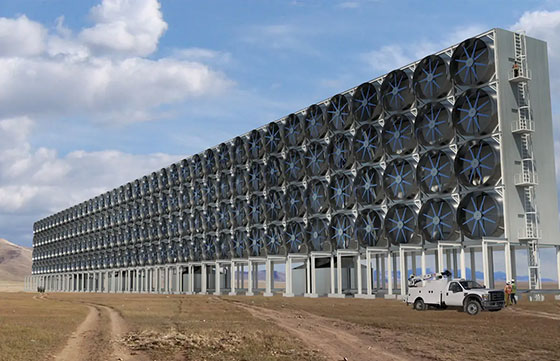
In the fight against climate change, carbon capture technology has proven to be both a beacon of hope and a subject of fierce debate. Governments, industries, and climate advocates are turning increasing attention to carbon capture, usage, and storage (CCUS) as a possible way to minimize greenhouse gas emissions and even achieve negative emissions, hence the surge of online marketplaces and entertainment platforms, such as the vulkanvegas casino to minimize the footprint of carbon emissions. However, as the threat grows, so do critical questions like, can trapping really reverse climate change, or is it a technological distraction from more basic changes? Let’s find out below!
The Concept of Carbon Trapping Technology
This is a suite of technologies designed to trap carbon dioxide (CO₂) emissions before they enter the atmosphere or to remove existing ones from the air. Broadly speaking, C trapping falls into three categories, and they are as follows:
- Point-source capture — this captures CO₂ straight from industrial or energy-related sources like power plants and cement factories.
- Direct air capture (DAC) — this removes CO₂ already in the atmosphere, even from diffuse sources like car emissions.
- Bioenergy with carbon capture & storage (BECCS) — entails growing biomass, burning it for energy, and capturing the emitted CO₂.
Once captured, it can be stored underground in geological formations (CCS). It can equally be used in products like synthetic fuels, building materials, or fizzy drinks (CCU).
Why the Surge?
Several factors have led to the recent boom in investment in carbon trapping. First is the U.S. Inflation Reduction Act of 2022, which offers generous tax credits (up to $180 per ton) for CO₂ removal via DAC. Similar laws exist in the UK, Canada, and the EU. Likewise, major emitters like ExxonMobil, Chevron, and Shell have adopted net-zero targets, usually depending mainly on trapping to meet them. Furthermore, startups in C-trapping have raised over $10 billion in private funding between 2020 and 2024.
How Much Carbon Should Be Captured?
To meet the 1.5⁰C warming limit highlighted in the Paris Agreement, the IPCC estimates that 10 gigatons of CO₂ per year may need to be removed from the atmosphere by 2050. To put this in perspective, the world presently emits more than 36 gigatons of CO₂ each year. Yet, as of 2024, global C trapping capacity stands at just 0.045 gigatons, a tiny fraction of what is required. As a result, scaling C trapping to 10+ gigatons every year would mandate thousands of new capture facilities and massive infrastructure for CO₂ transport and storage. Trillions in investment, as well as legal frameworks for liability, monitoring, and safety, would be required.
Is This Concept a Dangerous Distraction, as Some Critics Say?
Some climate scientists and environmentalists argue that the present boom in C capture is a dangerous distraction from emissions reduction. Many CCUS projects are attached to oil and gas operations, allowing them to keep extracting fossil fuels under the guise of carbon neutrality. Hence, any promise of future C removal can delay necessary behavioral, economic, and policy changes today. Even aggressive scaling may only offset a small portion of global emissions, especially if they keep rising. As a result, Naomi Oreskes, a historian of science at Harvard, bluntly states that “Carbon Capture is a license to pollute.” The central idea of this argument is that many CCUS projects are designed to reduce the impact of fossil fuel industries instead of replacing them with renewables. However, it has been useful in places where emissions are hard to eliminate;
- Cement and steel — these sectors emit CO₂ through chemical processes that can’t be fully electrified.
- Waste-to-energy plants — capture here could prevent incinerators from becoming major emitters.
- DAC for negative emissions — if powered by renewables, DAC can offer true C removal to offset unavoidable emissions.
Despite all its usefulness in the areas mentioned above, carbon trapping is less effective in coal plants where retrofitting aging coal plants is expensive and usually uneconomical. Also, using capture as a justification for continued pollution usually leads to greenwashing.
The Need for a Balanced Strategy Going Forward
Can carbon trapping reverse climate change? The simple answer is, not on its own. However, can it be a potent instrument in a broader climate toolkit? Of course, if used responsibly and in the right contexts. A balanced approach will begin with prioritizing the reduction of emissions through renewables, efficiency, and lifestyle changes. Then, proceeding to use CCUS in industries like cement, steel, and waste management, where no alternatives exist. It is a good idea to invest in DAC and BECCS. However, ensure that they are powered by clean energy and that the captured CO₂ is truly removed and stored safely with full transparency. Also, note that the CCUS should be used to phase out rather than extend the fossil fuel era.
Building a Future That Minimizes and Reverses the Effects of Climate Change
Carbon capture alone cannot reverse climate change. Likewise, it is not a substitute for slashing fossil fuel use, changing energy systems, or transforming consumption patterns. Yet, when used carefully, it can help to neutralize emissions that are hard or impossible to avoid. Therefore, it acts as a connector toward a truly net-zero future.