‘Satan’s Blood’ Blu-ray Review (Treasured Films)
Stars: José María Guillén, Mariana Karr, Ángel Aranda, Sandra Alberti | Written and Directed by Carlos Puerto
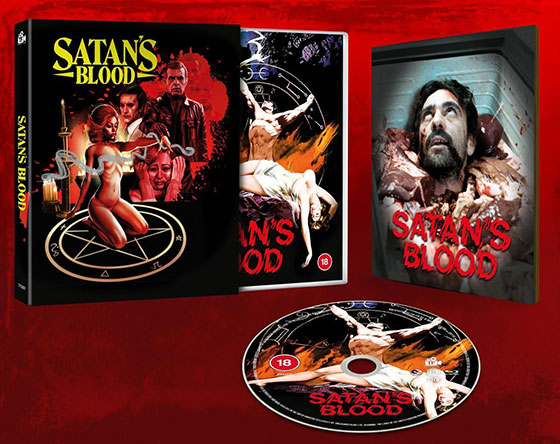
Carlos Puerto’s Satan’s Blood, originally released in 1978, is an eerie and unsettling Spanish horror film that taps into the rising wave of supernatural and occult-themed cinema of the era. Produced by Juan Piquer Simón (Pieces, Slugs), the film blends elements of satanic panic, psychological terror, and eroticism, creating a disturbing experience that lingers long after the credits roll. While Satan’s Blood may not be as widely recognized as other European horror classics, it remains an atmospheric and effective shocker that deserves more attention from genre aficionados.
The story follows a young couple, Andrés (José María Guillén) and Ana (Mariana Karr), who encounter an older, seemingly friendly couple, Bruno (Ángel Aranda) and Berta (Sandra Alberti), while on a drive through the countryside. After a chance meeting, Bruno claims to know Andrés from years past and invites the couple to his secluded mansion. What begins as an innocent evening of conversation, fine dining, and parlour games soon spirals into a nightmare of satanic rituals, seduction, and hallucinatory horror.
The film explores themes of manipulation, paranoia, and the loss of control, as Andrés and Ana are slowly ensnared in a web of dark forces beyond their comprehension. It plays heavily on the fear of the unknown and the supernatural, blending psychological horror with supernatural dread in a way that is both subtle and shocking. The presence of satanic worship, hypnotic control, and eroticized horror gives Satan’s Blood a dreamlike (or rather, nightmarish) quality reminiscent of films like Rosemary’s Baby (1968) and The Devil Rides Out (1968).
One of Satan’s Blood’s greatest strengths is its haunting atmosphere. The film employs dim lighting, deep shadows, and a gothic setting to create an overwhelming sense of dread. The house itself – claustrophobic, dimly lit, and filled with strange artefacts – becomes a character in its own right, trapping the protagonists in its malevolent grasp. The cinematography often uses soft focus, odd angles, and slow zoom-ins to heighten the film’s dreamlike, almost surreal quality.
Carlos Puerto, credited as director, brings a restrained but effective approach to storytelling. However, reports suggest that producer Juan Piquer Simón had significant influence over the production, which might explain the mix of slow-burn suspense and sudden bursts of violent horror.
As with many European horror films of the 1970s, Satan’s Blood blends eroticism with horror, utilizing nudity and sexual themes to heighten the characters’ vulnerability and discomfort. This is particularly evident in the film’s ritualistic sequences, where sensuality and fear intertwine in ways that feel both alluring and deeply unsettling. While some of these scenes may come across as exploitative by today’s standards, they contribute to the film’s pervasive sense of corruption and loss of innocence.
The performances in Satan’s Blood are serviceable, with José María Guillén and Mariana Karr effectively portraying a couple caught in a waking nightmare. Ángel Aranda and Sandra Alberti, as their mysterious hosts, exude an eerie charm that gradually gives way to outright menace. While the acting occasionally feels stilted—partly due to dubbing in various international releases—the commitment to the material helps maintain the film’s unsettling tone. Meanwhile, the film’s practical effects, while minimal, are effective when used. Bloodletting, satanic iconography, and disturbing imagery contribute to the film’s horror, even if it relies more on atmosphere than outright gore. The score, eerie and droning, enhances both the performances and the nightmarish quality of the events unfolding on screen.
Though Satan’s Blood never achieved the same level of recognition as other European horror films of its time, it remains an underrated gem within the satanic horror subgenre. It sits comfortably alongside films like The House of the Devil (2009) and The Mephisto Waltz (1971), serving as an example of how slow-building tension and an oppressive atmosphere can create genuine unease.
For fans of 1970s occult horror, Satan’s Blood is an essential watch. It offers a blend of psychological manipulation, supernatural horror, and erotic unease that encapsulates the era’s obsession with satanic cults and paranoia. While not without its flaws—some slow pacing and occasional narrative inconsistencies—the film delivers a uniquely chilling experience that deserves more recognition and hopefully, thanks to this new release from Treasured Films that’s exactly what it gets.
Special Features:
- New Audio Commentary with Jonathan Rigby and Kevin Lyons
- Satan’s Blood: Recuerdos de Escalofrio: 45 minute Spanish documentary on the making of Satan’s Blood
- House of Diabolism: Stephen Thrower on Escalofrio: New in-depth appreciation by the film writer
- Rated ‘S’ for Simón: New video essay with author Kim Newman on the films of Juan Piquer Simón
- Satanic Panic: Diabolic Cinema of the ’70’s: New essay with film writer Darrell Buxton on Satanic cinema of the 1970’s
- Devil’s Music: The Satan’s Blood Composer Speaks: Interview with composer Librado Pastor
- A private Concert with Librado Pastor: Composer Pastor plays some of his film themes
- The We Belong Dead guide to Spanish Horror: A brief guide through Spanish horror from the writing team of We Belong Dead magazine
- Trailer
- Image gallery
***½ 3.5/5
Satan’s Blood will be released on Blu-ray on March 3rd, courtesy of Treasured Films.