‘Mark of the Vampire’ Blu-ray Review (Warner Archive)
Stars: Bela Lugosi, Lionel Barrymore, Carroll Borland, Jean Hersholt, Lionel Atwill, Elizabeth Allan | Written by Guy Endore, Bernard Schubert | Directed by Tod Browning
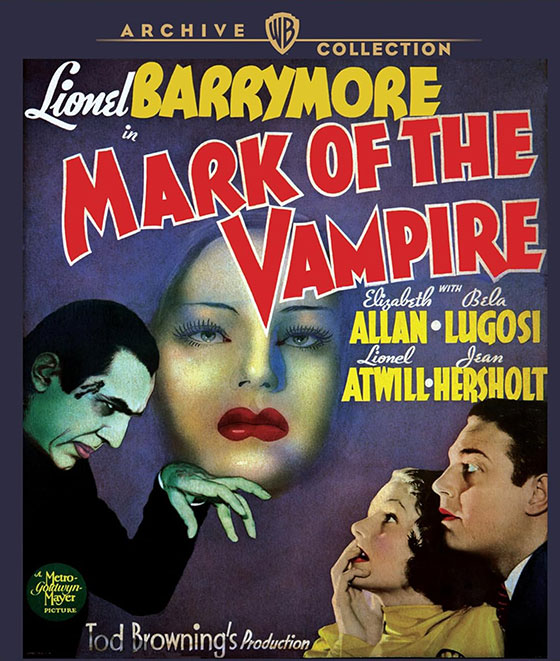
Tod Browning’s 1935 film Mark of the Vampire is a compelling entry in early sound-era horror cinema, blending gothic atmosphere with an intriguing twist on vampire mythology. Renowned for its haunting visuals and surprising narrative, the film stands as both a tribute to and a playful critique of traditional horror tropes.
The film begins with a classic setup: a remote European village shrouded in superstition, a mysterious death with puncture wounds on the victim’s neck, and whispers of vampiric activity. Count Mora (Bela Lugosi) and his ghostly daughter Luna (Carroll Borland) are at the centre of the villagers’ fears. As the story unfolds, Browning masterfully subverts audience expectations, delivering a twist that shifts the narrative from supernatural horror to a detective story steeped in theatrical deception.
This blending of genres may leave some viewers puzzled or disappointed, especially those expecting a straightforward vampire tale. However, Browning’s decision to undermine traditional horror conventions highlights his creative ambition and willingness to experiment with storytelling. The film becomes as much about the mechanics of fear and belief as it is about the creatures that inspire them.
Bela Lugosi, fresh off his iconic role as Dracula, delivers a chilling performance as Count Mora. With his commanding presence and piercing gaze, Lugosi imbues Mora with an enigmatic allure that captivates viewers, even in the character’s limited screen time. Carroll Borland’s Luna is equally striking, her ethereal movements and haunting stare crafting a spectral presence that lingers long after the film ends.
Lionel Barrymore, playing the professor tasked with uncovering the truth, offers a solid performance, though his character often feels like a conduit for exposition. The supporting cast effectively conveys the terror and paranoia gripping the village, adding layers to the film’s oppressive atmosphere.
Browning’s background in silent cinema is evident in Mark of the Vampire’s stunning visuals. The film’s expressionistic cinematography, courtesy of James Wong Howe, creates a dreamlike, otherworldly quality. Shadows dominate the mise-en-scène, with cobwebbed corridors, fog-drenched forests, and eerie close-ups contributing to an unforgettable gothic aesthetic.
The film’s pacing is deliberate, with Browning taking his time to build suspense. While this slow burn enhances the mood, it may test the patience of modern audiences accustomed to faster narratives. The payoff, however, is worth the wait, as the final act delivers both shocks and an unexpected meta-commentary on the genre.
Mark of the Vampire is as much a film about the performance of horror as it is a horror film itself. Its twist ending challenges the audience’s assumptions and reflects Browning’s fascination with illusion, a theme he explored in his earlier works like Freaks (1932). While some critics and viewers have debated the effectiveness of the twist, it undeniably sets the film apart from its contemporaries.
Despite its flaws, Mark of the Vampire remains a milestone in horror history, celebrated for its atmosphere, performances, and innovative narrative structure. It may not be as iconic as Browning’s Dracula (1931), but it is a fascinating and worthy addition to the canon of classic horror cinema.
Blu-ray Special Features:
- Commentary by Genre Historians Kim Newman and Stephen Jones
- Short A Thrill for Thelma
- Cartoon The Calico Dragon
- Theatrical Trailer
**** 4/5
Warner Bros. released Mark of the Vampire on Blu-ray yesterday, December 23rd, as part of their Archive Collection.