
‘The Sword and the Sorcerer’ 4K UHD Review (101 Films)
Stars: Lee Horsley, Richard Lynch, Richard Moll, Kathleen Beller, Simon MacCorkindale, George Maharis, Anthony De Longis, Robert Tessier, Nina van Pallandt | Written by Albert Pyun, Tom Karnowski, John V. Stuckmeyer | Directed by Albert Pyun
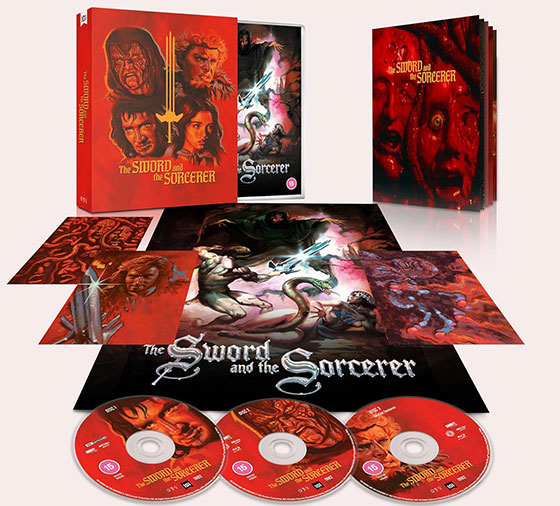
Albert Pyun’s The Sword and the Sorcerer is a notable entry in the sword and sorcery genre that has left a distinct mark on me since childhood thanks to its blend of camp, spectacle, and unrestrained imagination. Despite operating with a modest budget and limited resources, Pyun’s debut feature showcases a mix of ambition and creativity that put the film firmly on my radar back in the VHS rental days. Plus it starred Lee Horsley, who I knew as TV’s Matt Houston, so what was not to love?
The Sword and the Sorcerer emerged during a pivotal period for the sword and sorcery genre. The early 1980s saw a renaissance in such films, with movies like The Beastmaster, Conan the Barbarian and its sequels really making something of an impact at the box office and, more importantly, home video. This era was defined by a blend of mythical settings, heroic quests, and dark magic. Pyun’s movie stands out as an early contributor to this cinematic movement, showcasing the thematic staples of vengeful heroes, despotic rulers, and mystical weaponry.
The story follows the mercenary hero Talon, played by Lee Horsley, who embarks on a quest to avenge his family and reclaim his kingdom from the sinister warlord Cromwell (Richard Lynch) and the revived sorcerer Xusia (Richard Moll). This plotline embodies the genre’s traditional structure, where the stakes involve personal revenge intertwined with a fight against evil forces. The film’s most memorable element, a three-bladed sword capable of shooting its blades, adds a unique and campy twist to its armoury of fantastical tropes.
Compared to its contemporaries like Conan the Barbarian, which leaned into epic seriousness and gritty realism, The Sword and the Sorcerer embraces a more pulpy and tongue-in-cheek tone. This approach may not resonate with audiences seeking the gravitas of Robert E. Howard’s adaptations, but it offers charm for those who appreciate playful action and over-the-top theatrics.
The Sword and the Sorcerer is marked by practical effects, elaborate sets, and inventive action scenes that belie its limited budget. While the film lacks the polished spectacle of higher-budget epics, it compensates with energetic direction and imaginative use of resources. The dark, almost gothic production design and the memorable grotesque makeup effects contribute to the film’s status as a cult favourite. It really was a remarkable debut for Pyun and would be something of a blueprint for his future career. The Sword and the Sorcerer was both a launching pad and a defining benchmark. The film’s commercial success opened doors for Pyun to pursue a prolific career that included cult hits like Cyborg (1989) and Nemesis (1992). His oeuvre became synonymous with low-budget yet ambitious genre films that balanced visual flair with inventive, if imperfect, storytelling.
The Sword and the Sorcerer fits within the broader spectrum of sword and sorcery films that includes the likes of Krull (1983), The Beastmaster (1982), and Hawk the Slayer (1980). It shares Krull’s inventive yet impractical weaponry and Beastmaster’s balance between camp and heroism but with a more overtly tongue-in-cheek tone. Pyun’s film also foreshadows aspects of later B-movie staples, emphasizing spectacle over meticulous storytelling – a hallmark that would characterize much of his later work, reflecting both the strengths and weaknesses of Pyun’s fledgling style. While the opening act brims with intrigue and dark fantasy elements, the middle sections occasionally falter under narrative bloat and thinly sketched secondary characters. Nevertheless, these imperfections are part of its charm, showcasing Pyun’s ambition and willingness to take risks, even if they result in occasional missteps.
Though The Sword and the Sorcerer may not reach the iconic status of Conan the Barbarian, it holds an enduring place in my filmic history (which is probably why I own so many copies of the film on so many formats!) Its influence can also be seen in later works that prioritize unique concepts and charismatic anti-heroes – I always thought Lucio Fulci’s Conquest reflected the grungy grotesquery of Pyun’s film – even it was other sword and sorcery films that inspired it more.
While later films would cement Pyun’s reputation as a director unafraid to experiment with genre conventions, The Sword and the Sorcerer stands out as his most straightforward yet indulgent foray into high fantasy. It captures Pyun’s distinct approach: prioritizing mood and creativity over conventional narratives. This film laid the groundwork for Pyun’s recurring themes of lone heroes, dark quests, and ambiguous morality, traits he revisited in post-apocalyptic and cyberpunk settings. Traits that made me a life long fan!
Extras/Special Features:
- Rigid box packaging
- Set of art cards
- Poster featuring original artwork
- Limited edition booklet includes ‘Cromwell’s Madhouse: The Sword and the Sorcerer Revisited’ by Mat Colegate and ‘The Sword, the Sorcerer and the Visionary’ by Paul Rowlands
- Tales of the Ancient Empire – An interview with director Albert Pyun
- A Princess’ Tale – An interview with actress Kathleen Beller
- Mightier than the Sword – An interview with co-writer/co-producer John Stuckmeyer
- Master of the Blade – An interview with editor Marshall Harvey
- The Specialist and the Effects – An interview with special makeup effects artist Allan Apone
- Brothers in Arms – An interview with special effects artists the Chiodo brothers – Charles, Edward and Stephen
- Dedicated to Jack Tyree, Stuntman – The cast and crew remember stuntman Jack Tyree
- Trailers From Hell – Editor Marshall Harvey on the Sword and the Sorcerer
- Theatrical trailers
- TV spot
- Still gallery
***** 5/5
The Sword and the Sorcerer is out now as a 3-disc limited edition 4K UHD boxet from 101 Films. Also check out my “love letter” to Albert Pyun, from when he announced his retirement, right here.