
Frightfest 2024: ‘Charlotte’ Review
Stars: Georgia Conlan, Dean Kilbey, Ian Laing, Jennifer K Preston, Angel-May Webb, Kate Spencer, Keith French, Charlotte Monkhouse, Alexander Harriss | Written by Georgia Conlan, Martin Hardwicke | Directed by Georgia Conlan
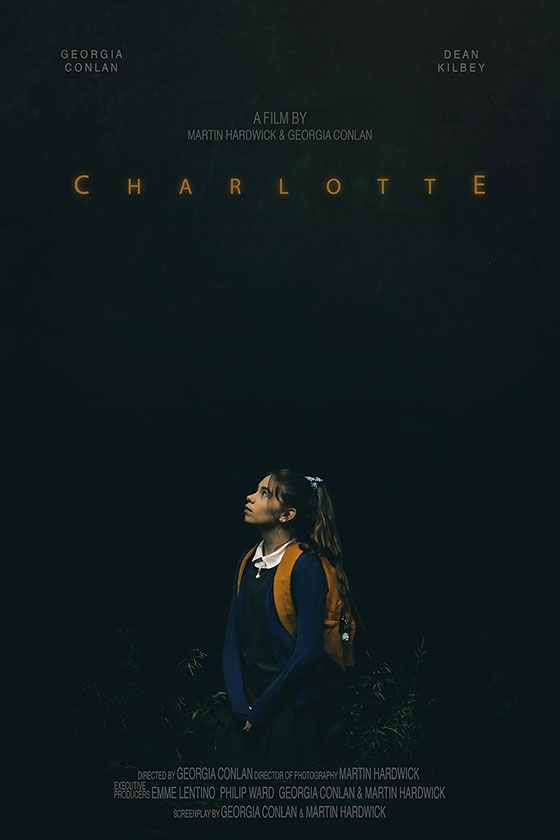
After running away from home, twelve-year-old Charlotte (Georgia Conlan) finds herself outside the home of Roy (Dean Kilbey), an older man who invites Charlotte to stay overnight.
This is the premise of Georgia Conlan’s directorial debut (which she also co-wrote and stars in) that attempts to grapple with the theme of child sexual exploitation, a very real societal issue. What started with beautiful cinematography and an exciting opening scene was undone by the creative choices that, regrettably, Conlan’s Charlotte incorporated.
Ultimately, Charlotte does not contribute to the national dialogue on this sensitive and serious issue. Conlan is a talented performer, but her role as director left much to be desired. Clearly, her focus was on showcasing her acting range (with a lot of crying scenes) rather than telling a story which sadly made the production feel incredibly self-indulgent. Overall, the acting was fine, but a special mention goes out to Dean Kilbey, who convincingly portrayed ex-convict Roy and kept the audience engaged with his nuanced malevolence.
Narratively, the story leaves much to be desired as it jumps from being about child grooming to locating missing children. Then it’s about foiling a sex trafficking ring, but actually, it’s about Charlotte (who is only posing as a twelve-year-old) getting her revenge on Roy, who was her next-door neighbour and had abused her as a child. While Conlan has some interesting story ideas, she and her writing partner, Martin Hardwicke, failed to put them into any cohesive order, creating a highly confusing plot. Furthering the confusion is the writing decision to involve characters and sub-plots that have no impact on Charlotte’s character development and emotional arc, as there’s nothing for her to learn or overcome, which she would then use to fulfil her purpose during the film’s climax.
From a directorial standpoint, the idea of writing plot twists in storytelling is always ambitious, and it takes an experienced hand to achieve that “mind-blown” reaction from the audience. On this occasion, the execution was poor. This was because Conlan had no idea what she wanted her movie to be about. This meant that crucial story beats that were required during the movie’s set-up were missed and, like a domino effect, rendered its third act unfulfilling.
Adding to the audience’s frustration are the writing decisions, which made the characters seem inept and did not endear them to the audience. In one scene, whilst Roy is out, Charlotte is followed into his home by some other teenagers she had argued with. As Roy returns home (only to head back out again immediately), the teenagers hide under a bed after Charlotte reveals that he is a paedophile. Yet, when alone, the teenagers discover that Roy has locked the door, which, of course, eliminates all other methods of escape. They only escape once Roy returns home (again) by sneaking out the front door… except Charlotte, who is immediately apprehended: cue the waterworks. At this point in the movie, the audience has deciphered Conlan’s formula for using dramatic tension. So, the “edge of your seat” tone that the film desperately tries to emulate sharply diminishes with each tear that rolls down Conlan’s face
The lesson that Charlotte teaches is that novice filmmakers must appreciate that creating a movie is a collaborative endeavour that seeks to tell a singular story and convey a singular message. Unfortunately, Conlan’s split focus resulted in a confusing, underwhelming, and gratuitous feature that exploited devasting real-world issues in order to enhance the film’s profile.
** 2/5
Charlotte screened as part of this year’s Frightfest London