
European Casinos for UK Players (2026)
Search “european casinos” from a UK address and you get two completely different answers stitched together: glossy land-based rooms in Monte Carlo, Baden-Baden or Tallinn, and a long tail of websites holding licences from Malta, Gibraltar, Estonia, Curaçao and places in between. The two are governed by entirely different rules, and only one of them involves you depositing money from a British bank account into a company that may or may not be allowed to take it.
This guide takes the phrase apart. It covers what a European licence actually authorises, why a Malta or Curaçao permit does not let a site serve Great Britain, what consumer protections you are trading away if you play outside the UK-regulated market, and what to expect if you walk into a casino on holiday in Europe. No offers, no rankings, no operator recommendations beyond a handful of neutral examples of brands that hold a Gambling Commission licence.
The short version
- Gambling in Great Britain is regulated by the Gambling Commission under the Gambling Act 2005. Only a UKGC licence permits an operator to offer online gambling to people in GB.
- A Malta (MGA), Curaçao, Estonian or other European licence does not authorise service to GB customers. Operators taking GB players without a UKGC licence are acting outside the law, and advertising them to GB consumers is also an offence.
- Playing on a UKGC-licensed site gives you GAMSTOP, verified-before-deposit rules, a credit card ban, stake limits on slots, and access to an approved ADR provider such as IBAS if a complaint stalls.
- Visiting a casino in person while you are physically in another European country is a different matter entirely: you are subject to that country’s rules, and you will usually need a passport or national ID card.
- Every UKGC licensee is listed on the Commission’s public register, searchable by company name or account number. Check it yourself before you deposit anywhere.
What “European casinos” actually means
The phrase is doing a lot of work. In search terms it usually covers three separate things, and conflating them is how people end up in trouble.
Bricks-and-mortar casinos in European countries. These are physical venues regulated by the country they sit in: France, Germany, Spain, Italy, the Netherlands, the Nordics, the Baltics, Central Europe. If you are standing in the building, you are playing under local law with local consumer protections, local table limits and local entry requirements. Nothing about UK regulation applies, because the activity is not taking place in Great Britain.
Online casinos licensed in a European jurisdiction but aimed at their own domestic market. Sweden, Denmark, Germany, the Netherlands, Italy, Spain and others all run national online licensing systems. Those sites are usually geo-restricted to residents of that country. They are not an “alternative” available to a UK player; they simply are not open to you, and there is no legitimate way to make them open to you.
Online casinos holding a “European” licence and marketing broadly. This is the category most search traffic actually lands on: sites waving an MGA, Gibraltar, Isle of Man, Estonian or Curaçao credential, sometimes accepting sterling, sometimes accepting UK debit cards. This is where the legal question bites, and where the honest answer is less exciting than the marketing suggests.
It is worth noting that some of the best-known names in the UK-regulated market have deep European roots and European corporate structures. That is not the point. What matters for a GB consumer is not where a company is headquartered but which licence covers the account you open.
The legal position for players in Great Britain
Since the Gambling Act 2005 and the subsequent point-of-consumption reforms, the rule is straightforward: it is an offence to provide facilities for gambling to people in Great Britain without a licence from the Gambling Commission. That applies regardless of where the servers, the company or the directors sit. Advertising unlicensed gambling to GB consumers is also an offence, which is why you will not find an operator named on this page unless it holds a UKGC licence.
Two practical consequences follow. First, an operator holding only a Malta, Curaçao, Gibraltar or Estonian licence and accepting deposits from GB residents is operating outside British law. Its home regulator has no obligation to help a GB customer, because that customer should not have been there under the terms of the British system. Second, “regulated in Europe” is not a synonym for “regulated for you”. A licence is a permission to do something in a defined market, not a global passport.
The bit people get wrong. A Malta (MGA) or Curaçao licence does not permit an operator to serve Great Britain. Only a UKGC licence does. The presence of a European regulator’s logo in a site footer tells you nothing about whether that site is allowed to take your money.
For clarity: the law here targets operators, not the individual having a punt. Nobody is suggesting a player is committing an offence. The problem is more prosaic and more expensive. If the operator is not licensed for your market, the remedies you would normally expect — complaint escalation, dispute adjudication, a regulator with teeth over your account — thin out to almost nothing. That is the real cost, and it only becomes visible at the exact moment you need it.
Why UK players look beyond UK-licensed sites
It would be dishonest to pretend the search volume comes from nowhere. There are recognisable reasons people type this phrase, and most of them are rational even when the destination is not.
Affordability and source-of-funds checks. UKGC licensees must run anti-money-laundering and customer-interaction checks, which in practice can mean document requests and occasional account freezes. Some players find this intrusive and go looking for somewhere that asks fewer questions. That is also the core appeal of no-KYC and no-verification casinos, and it is worth understanding that identity verification is not bureaucratic decoration: it is what makes a withdrawal dispute winnable.
Self-exclusion. A player registered with GAMSTOP cannot open or use an account at any UKGC-licensed online operator. Some then search for sites outside the scheme. Our separate explainers on non-GAMSTOP casinos and betting sites not on GAMSTOP exist to explain why that search happens and what it costs, not to help anyone get around a self-exclusion they chose.
Product differences. UK-licensed slots have no autoplay, no turbo spin and a minimum spin duration. Stake limits apply. Some players want older, faster, less restricted versions of the same games. Others want game studios or live-dealer suppliers that have not gone through UK certification.
Bonus terms. Historically, offshore sites have advertised bigger headline numbers. The catch is usually in the wagering, the maximum cashout and the game weighting rather than the headline figure, which is a theme we cover in the casino bonus guide.
Payment preferences. Cryptocurrency is essentially absent from the UK-licensed market. UKGC-licensed operators generally do not accept crypto deposits, so anyone specifically wanting to gamble with tokens ends up looking at unlicensed sites by definition.
European licensing regimes, briefly
If you are going to make sense of footer logos, it helps to know what each regime is for. None of the entries below authorise service to Great Britain.
| Regime | What it is | Can it serve GB players? |
|---|---|---|
| Gambling Commission (Great Britain) | Statutory regulator under the Gambling Act 2005; licensees listed on a public register | Yes — the only licence that does |
| Malta Gaming Authority | Long-established EU licensing hub; many multi-market operators are based there | No |
| Gibraltar | Licensing regime used by several large operators; a number also hold UKGC licences separately | No, not on its own |
| Isle of Man / Alderney | British Crown Dependency and Channel Island regimes, popular with B2B suppliers and some operators | No, not on their own |
| National EU systems (Sweden, Denmark, Germany, Netherlands, Italy, Spain and others) | Domestic licences with country-specific rules on limits, bonuses and self-exclusion registers | No — generally restricted to local residents |
| Curaçao | Reformed its gaming law in 2024 with a new national ordinance and the Curaçao Gaming Authority | No |
The 2024 Curaçao reform is worth a note because it is frequently misrepresented. Replacing the old master-licence arrangement with a national ordinance and a named regulator is a meaningful tidying-up of a jurisdiction that badly needed it. It does not change the British position by a single comma. A Curaçao licence still gives an operator no right to take GB customers, and a GB customer no route to the Gambling Commission or an approved ADR scheme. We go through that in more detail in the Curaçao casinos guide.
The other thing to watch for is the gap between a logo and a licence. Footer badges are images. They can be copied, they can be out of date, and they can point to a licence held by a different corporate entity from the one running the site you are on. The only version that counts is the entry on the regulator’s own register.
What a UKGC licence actually gives you
Rather than asserting that regulated is better, here is the specific list of things a UKGC licensee must do. Most of them are invisible until you need them, which is precisely why they are easy to undervalue.
| Protection | What it means in practice |
|---|---|
| GAMSTOP membership | A licence condition for all UKGC-licensed online operators since 31 March 2020. One free registration blocks your accounts across the whole licensed market for 6 months, 1 year or 5 years. |
| Verification before you play | Age and identity must be verified before you can deposit or gamble — rules in force since May 2019. That means the operator knows who owns the balance when it is time to pay out. |
| No credit card gambling | Banned at UK-licensed operators since 14 April 2020. You cannot gamble with borrowed money on a card. |
| Slot stake limits | £5 per spin for adults aged 25 and over from 9 April 2025; £2 per spin for 18–24 year olds from 21 May 2025. |
| Slot design rules | Since October 2021: no autoplay, no turbo or quick spin, a minimum of 2.5 seconds per spin, and no celebratory sound or visuals for a return lower than the stake. |
| Bonus rules from 19 January 2026 | Wagering requirements capped at 10x, and cross-product promotions — bet on sport to unlock casino spins, for example — banned. |
| Dispute resolution | Licensees must offer an approved ADR provider such as IBAS once their internal complaints process is exhausted. |
| Insolvency disclosure | Operators must tell you how well customer funds are protected if they go under: not protected, medium protection or high protection. |
| Funded treatment and research | A statutory levy on operators to fund research, prevention and treatment started on 6 April 2025. |
Strip that list away and you are left with an account governed by terms and conditions you did not negotiate, enforced by a company you cannot reach, in a jurisdiction that did not expect you to be there. That is the honest trade. Our overview of non-UK casinos walks through the same trade from the other direction.
Where the rulebooks diverge in practice
The interesting differences are not philosophical, they are mechanical. Here is what a UK-regulated session feels like compared with an unregulated one.
Speed and stake
A UK-licensed slot will not let you hold down a turbo button or set a hundred spins running while you make a cup of tea. Each spin takes at least 2.5 seconds, you have to initiate it, and a “win” of 40p on a £1 stake will not play you a fanfare. Offshore versions of the same games often retain autoplay, quick spin and uncapped stakes. The practical effect is a large difference in how much money can move through an account per hour, which is exactly why the rules exist. If you want the detail on how UK slot sites are built now, the slots sites guide goes deeper.
Bonuses and wagering
From 19 January 2026 the UK market caps wagering at 10x and bans promotions that mix products. That is a structural change to how offers can be designed, and it removes some of the more exotic constructions. Outside the UK market, wagering multiples, maximum-win caps on bonus funds, game weightings and maximum bet rules while a bonus is active remain entirely at the operator’s discretion. A headline figure with a high multiple and a low cashout cap can be worth less than a modest offer with clean terms, which is the point we labour in the free spins and no deposit bonus explainers.
Account controls
UK licensees must offer deposit limits, reality checks, time-outs and self-exclusion, and must honour them. Many offshore sites offer something that looks similar. The difference is enforceability: if a UK operator ignores a limit you set, there is a regulator and an ADR route. If an offshore operator ignores one, there is a contact form.
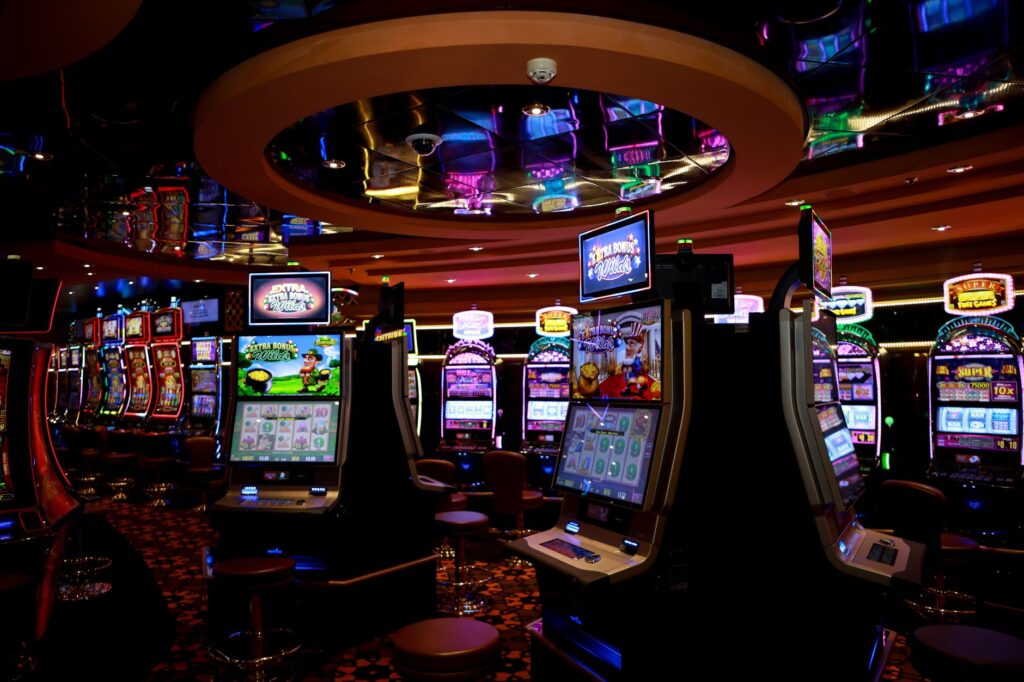
No workarounds here. This guide will not explain how to get past GAMSTOP, identity verification or geo-blocking, and it will not discuss VPN use for gambling. Those controls are the protection, not an obstacle to it. If you are actively trying to get round a block you set yourself, that is the signal to ring the National Gambling Helpline on 0808 8020 133 instead.
Payments, currency and whether your balance is safe
Money is where the theoretical becomes concrete. Three things to understand.
Where your balance actually sits. A gambling account balance is not a bank deposit. It is a liability owed to you by a company. UK licensees have to state the level of protection in place if they become insolvent, using the not protected / medium / high framework, so at least you can read it before you deposit. Outside that regime there may be no disclosure at all, and no segregated-funds requirement you can verify.
Currency and conversion. European-facing sites often price in euros. Depositing sterling into a euro-denominated account means a conversion on the way in and another on the way out, plus whatever your card issuer or bank adds. Two conversions and a possible non-sterling transaction fee can quietly eat a meaningful slice of a modest balance before any game is played.
Withdrawal friction. Slow payouts are the single most common complaint about unlicensed sites, and the mechanism is usually the same: a verification request arrives only when you try to withdraw, not when you deposit. The UK rule that identity must be verified before gambling exists precisely to stop that sequence. If you want to understand what genuinely fast payouts look like in a regulated setting, see the fast withdrawal casinos guide.
On crypto: UKGC-licensed operators generally do not accept cryptocurrency deposits, so a site advertising token payments to UK players is almost certainly unlicensed. That also means no chargeback, no card-issuer dispute and no banking regulator in the chain. We cover the mechanics and the risks in the crypto casinos write-up.
One genuinely simple point in your favour: winnings from gambling are not subject to income tax for UK players. That is true whether the game happened on a licensed UK site or at a roulette table in Europe. It has nothing to do with where the operator is licensed, and any site claiming its jurisdiction makes your winnings “tax free” is selling you something that was already yours.
Walking into a casino in Europe
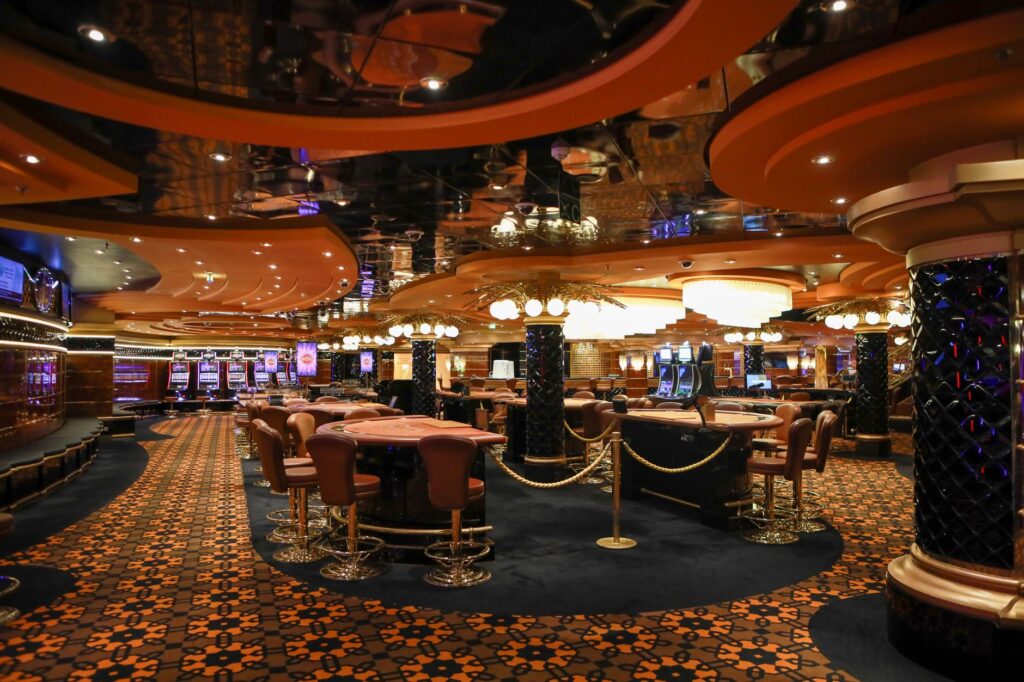
This is the part of the search term that involves no regulatory tightrope at all. If you are on holiday in France, Germany, Spain, Portugal, Italy, Austria, the Czech Republic, Estonia, Latvia or anywhere else with a licensed land-based sector, you can visit a casino as a tourist under local law. What varies is the admin.
| Practicality | What to expect |
|---|---|
| Identification | Most European casinos require a passport or national ID card at the door, not a driving licence. Bring the passport. |
| Registration | Some countries require you to register on entry, and your details may be checked against a national self-exclusion register. |
| Entry charge | Some historic venues and some countries still charge admission to the tables area. Others are free. Check before you travel rather than at the door. |
| Dress code | Varies wildly, from smart-casual slot floors to jacket-required table rooms in older spa-town and riviera venues. Trainers and shorts are the usual refusals. |
| Currency and tipping | Chips in local currency; cash exchange at the cage often carries a poor rate. Tipping dealers is customary in some countries and discouraged in others. |
| Minimum age | 18 in most of Europe, 21 in some countries and some individual venues. Take ID even if you are well past it. |
| Photography | Almost universally banned on the gaming floor. Assume no phones out at the tables. |
Two habits are worth forming. First, decide your budget in cash before you go in, leave the cards in the hotel safe, and treat the evening as a night out with a fixed price, the same way you would a theatre ticket. Second, learn the actual rules of the table game you intend to play before you sit down, because European roulette wheels, French roulette rules and local blackjack variations differ from the UK versions and from each other. Side bets and single-zero-versus-double-zero differences change the maths significantly, and the table is not the place to learn.
A word on national self-exclusion registers: several European countries run their own, and they are not linked to GAMSTOP. That means a GB self-exclusion will not stop you at a foreign door, and a foreign registration will not protect you at home. If you are self-excluded in the UK, a holiday is not a loophole — it is the same risk with worse support, in a country where you do not know the helpline number.
How to check a site is licensed for GB
This takes about three minutes and it is the only due diligence that actually matters. Do it before you enter a single detail.
- Find the licensing statement. Scroll to the site footer. A UKGC licensee must state the licensed operator’s legal name and its Gambling Commission account number. Vague wording like “licensed and regulated in Europe” is not a licensing statement.
- Search the public register. Go to the Gambling Commission’s own register and search by company name or account number. Do not use a link supplied by the gambling site itself.
- Match the entity and the domain. The register lists trading names and domains attached to each licence. If the website you are on is not listed against that licensee, treat the footer claim as unverified.
- Check the permissions. A licence can cover specific activities. Confirm the entry covers remote casino or betting as appropriate, and that the status is current rather than lapsed or surrendered.
- Test the responsible gambling tooling. A GB-licensed site will reference GAMSTOP, offer deposit limits and time-outs, and will not offer credit card deposits. Absence of all three is a strong tell.
- Read the withdrawal and bonus terms before depositing. Look for maximum cashout on bonus wins, maximum bet while a bonus is live, dormancy rules and the verification documents required. Screenshot them.
- Check the complaints route. The terms should name an approved ADR provider. If no ADR scheme is named, you have no external adjudicator.
If you want a starting point of names you can put through that process yourself, brands such as bet365, William Hill, Paddy Power, Betfair, Sky Bet, Ladbrokes, Coral, Betfred, BetMGM, Grosvenor, PokerStars, 888casino and LeoVegas all hold Gambling Commission licences. That is a list of examples for register practice, not a recommendation or a ranking, and it is not exhaustive. Check every one of them for yourself rather than taking any page’s word for it, including this one. Broader context on the regulated market sits in our online casinos and betting sites guides, with poker-specific detail in the online poker sites piece.
Upsides and downsides, honestly
There is no point pretending the offshore proposition has no appeal, or that the regulated market is frictionless. Here is the balance sheet as it stands.
Upsides
- Land-based European casinos are perfectly legitimate to visit while you are in the country, and many are architecturally remarkable in a way no app can replicate.
- Table game variants, house rules and room atmosphere genuinely differ between countries, which makes the trip interesting on its own terms.
- Some European-licensed online operators also hold UKGC licences for their British-facing sites, so familiar names are available inside the regulated market.
- Understanding foreign licensing makes you much harder to fool by a footer badge.
- Gambling winnings are not subject to income tax for UK players wherever the game took place.
Downsides
- An MGA, Gibraltar, Estonian or Curaçao licence does not permit service to GB players, so an offshore site accepting you is operating outside British law.
- No GAMSTOP coverage, no UK stake limits, no credit card ban, no slot design rules, no wagering cap from 19 January 2026.
- No approved ADR provider and no Gambling Commission oversight of your account, so a withheld withdrawal may have no independent adjudicator.
- No insolvency disclosure requirement, so you may have no idea whether customer funds are segregated.
- Currency conversion on deposits and withdrawals, plus potential non-sterling transaction fees.
- Verification demanded at withdrawal rather than at sign-up is a recurring source of frozen balances.
When something goes wrong
Disputes almost always come from the same three places: a withdrawal held pending documents, a bonus voided for an alleged breach of terms, or an account closed with a balance inside it. The process for resolving them looks completely different depending on the licence.
On a UKGC-licensed site, you complain to the operator first and give it a chance to answer through its published process. If that is exhausted and you are not satisfied, you take it to the approved ADR provider the operator names in its terms, IBAS being the best-known example. ADR is free to the consumer. Separately, the Gambling Commission does not settle individual disputes, but it does act on licensee conduct, and a pattern of complaints is what informs regulatory action. You can also raise a chargeback with your card issuer if a transaction was not authorised, and your bank’s gambling block is available as a hard stop.
On a site licensed elsewhere, your route depends entirely on that jurisdiction’s own arrangements, and whether it recognises a complaint from a customer who was outside the operator’s permitted market in the first place. Some regulators run complaints functions. None of them owe a GB consumer the British statutory framework. Practically, you are relying on the operator’s goodwill and your own documentation.
Keep the receipts. Whatever you play, screenshot the bonus terms at the moment you opt in, save deposit confirmations, and keep any chat transcripts. Evidence is the only currency in a dispute, and terms pages get edited without notice.
One structural point worth absorbing: the reason the regulated market can be irritating — documents up front, limits, slower slots, capped bonuses — is the same reason it has an enforcement mechanism at the other end. You cannot have adjudication without identification. A site that asks nothing of you owes nothing to you either. That is less a moral lesson than a design constraint, rather like complaining that a save system is annoying and then losing four hours of progress.
If your interest in going offshore is really about a specific product rather than fewer checks — independent operators, newer platforms, poker liquidity — there are regulated ways to look at that. See our guides to independent casinos, new online casinos and offshore casinos for the comparison, and poker sites not on GAMSTOP or crypto betting sites if you want the risks of those specific niches set out plainly.
Staying in control
Gambling is entertainment with a cost, not a way to make money, and the house edge does not care which country the licence came from. Nothing on this page is encouragement to play. If it has stopped being fun, or you find yourself researching ways around a block you set for yourself, help is free and confidential.
- National Gambling Helpline: 0808 8020 133 — free, 24/7, run by GamCare.
- GAMSTOP — free national online self-exclusion for 6 months, 1 year or 5 years, covering every UKGC-licensed online operator.
- Bank and card gambling blocks — most UK banks and card apps let you switch off gambling transactions, often with a cooling-off delay before it can be reversed.
- Blocking software — Gamban and BetBlocker restrict access to gambling sites and apps across your devices.
- Gamblers Anonymous and NHS gambling clinics for peer support and clinical treatment.
- Set deposit limits and time-outs before a session, not during one. You must be 18 or over to gamble.
Frequently asked questions
Is it legal for me to play at a European online casino from the UK?
The offence in British law falls on the operator, not the player: it is illegal to provide gambling facilities to people in Great Britain without a Gambling Commission licence, and illegal to advertise unlicensed gambling to GB consumers. So you are not the target of the law, but you are the one carrying the risk. An operator without a UKGC licence is outside the British system, which means no GAMSTOP, no approved ADR provider, no insolvency disclosure and no regulator with oversight of your account.
Does a Malta or Curaçao licence count as regulation for UK players?
It counts as regulation in that jurisdiction, for the markets that licence covers. It does not permit the operator to serve Great Britain, and it gives a GB customer no access to UK protections or to an approved UK dispute resolution scheme. Curaçao reformed its law in 2024 with a new national ordinance and the Curaçao Gaming Authority, which is a genuine improvement to that jurisdiction, but it changes nothing about the British position.
Can I use a UK debit card at a European casino site?
Sometimes the transaction goes through and sometimes it is declined, depending on your bank, the merchant category and whether you have a gambling block switched on. Whether it works is not a test of legality. Bear in mind that credit card gambling has been banned at UK-licensed operators since 14 April 2020, and if an offshore site is happy to take a credit card from a GB customer, that in itself tells you it is not operating under UK rules.
Do European casinos have the same stake limits as UK sites?
No. The £5 per spin online slot limit for adults aged 25 and over, introduced on 9 April 2025, and the £2 limit for 18–24 year olds, introduced on 21 May 2025, are UK rules that apply to UKGC licensees. Other countries set their own limits or none at all. The same goes for the UK slot design rules in force since October 2021: no autoplay, no turbo spin, a minimum 2.5 seconds per spin and no celebration of returns below the stake.
Will GAMSTOP stop me playing at a casino in Europe?
GAMSTOP covers online operators licensed by the Gambling Commission, which has been a licence condition since 31 March 2020. It does not reach sites outside that licensing regime, and it does not apply at land-based venues abroad, which may instead check their own national self-exclusion register. If you are registered with GAMSTOP and finding yourself looking for ways round it, that is worth treating as a warning sign rather than a technical problem. The helpline number is 0808 8020 133.
Do I pay tax on money won in a European casino?
Gambling winnings are not subject to income tax for UK players. That applies whether the win happened on a UK-licensed site or at a table in another country. Some countries apply local withholding or entry taxes at the venue, and you should expect the cage to apply local rules to local payouts, but that is a matter of foreign tax law rather than your UK position.
What should I take to a land-based casino in Europe?
A passport or national ID card, since many European venues will not accept a driving licence. Take a fixed amount of cash in local currency and leave the cards behind, check whether the venue charges admission and what its dress code is before you travel, and assume photography is banned on the gaming floor. Also check the minimum age, which is 18 in much of Europe but 21 in some countries and individual venues.
How do I tell a genuine licensing statement from a fake badge?
A real UKGC statement names the licensed legal entity and its Gambling Commission account number. Take that name or number to the Commission’s public register yourself, using a search engine rather than a link supplied by the gambling site, and confirm that the domain you are on is listed against the licence and that the status is current. Footer logos are just images, and phrases like “licensed and regulated in Europe” are marketing rather than a licence.