
‘Cthulhu: Dark Providence’ Board Game Review
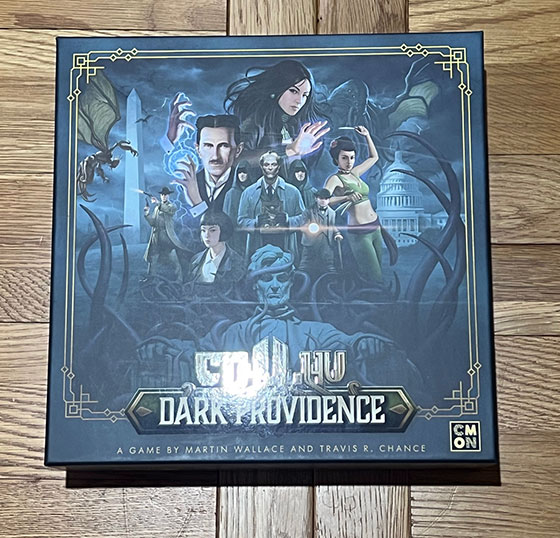
Cthulhu: Dark Providence, designed by Travis Chance and Martin Wallace and published by CMON, is a fascinating hybrid: part deck‑builder, part hidden‑role game, part area‑influence struggle set against the backdrop of the Great Depression. It reimplements Wallace’s A Study in Emerald, but rather than simply reskinning that design with tentacles and art deco horror, it reshapes the structure into something more accessible, more dramatic, and more tightly focused on social tension. It’s a game about mistrust, manipulation, and the slow, creeping influence of the Mythos on a nation already buckling under economic collapse.
The premise is immediately compelling. America in the 1930s is vulnerable, and the Elder Ones are exploiting that vulnerability through cults, corruption, and political decay. Players take on secret roles – Investigators, Cultists, or the new Dissidents – each with their own win conditions and their own interpretation of what “saving” or “reshaping” the country means.
The secret‑alignment structure is the engine that drives the game’s tension. You never quite know who is working with you, who is working against you, or who is quietly pursuing their own agenda. Even when someone appears to be helping, you can’t be sure whether they’re doing it for the same reasons you are.
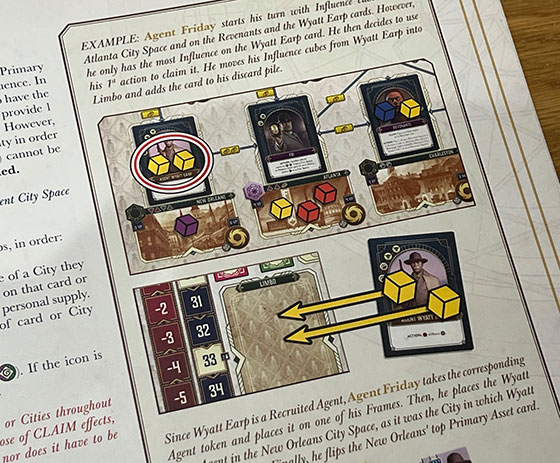
The deck‑building system is the backbone of the gameplay, and it’s where the Wallace influence is most visible. You’re not building a combo engine in the style of Dominion; you’re constructing a toolkit that lets you exert influence across the map, manipulate events, and subtly signal (or disguise) your allegiance. Every card you add to your deck is a statement about how you intend to play – and, just as importantly, how you want others to perceive you. Because the game is built around hidden roles, your deck becomes both a weapon and a mask.
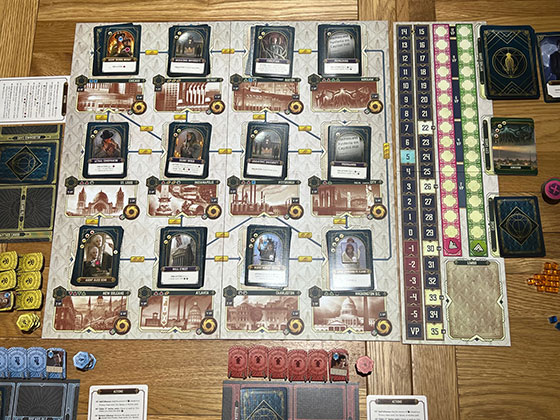
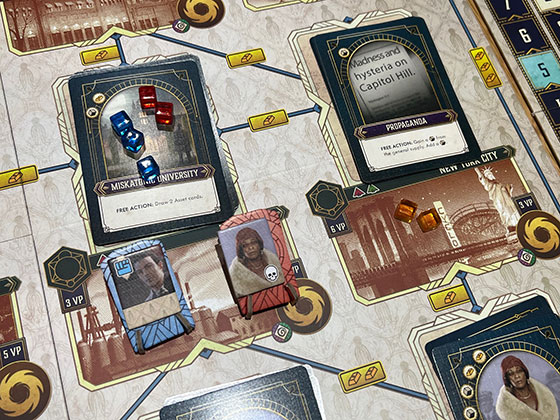
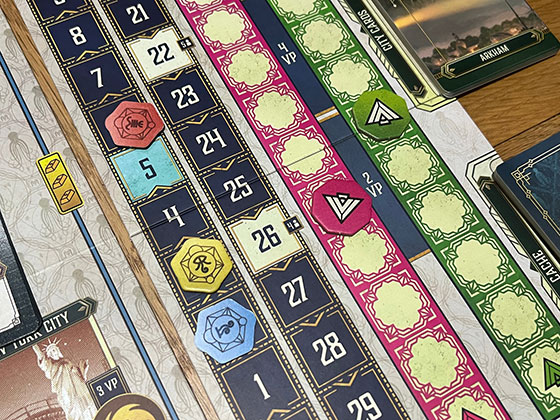
The board – an abstracted map of the United States – is divided into key cities, each representing political, economic, or occult hotspots. Players deploy agents, exert influence, and trigger events that shift the balance of power. The board state is constantly in flux, and because players’ goals differ, the same action can mean very different things depending on who takes it.
An Investigator might be trying to stabilise a region by closing its “gate”; whilst a Cultist might be trying to destabilise it to allow the Deep Ones to pass through; a Dissident might be trying to keep both sides off balance whilst advancing their own chaotic plan. The result is a game where every move feels loaded with ambiguity.
What sets Cthulhu: Dark Providence apart from other Lovecraft‑themed games – including CMON’s own Cthulhu: Death May Die – is its emphasis on subtlety rather than spectacle. There are no miniatures rampaging across the board, no dice‑driven combat, no escalating insanity tracks. Instead, the horror is political and psychological. The Elder Ones are not monsters to be fought; they are forces shaping society from the shadows. The tone is closer to noir than to pulp, and the art deco aesthetic reinforces that sense of creeping dread beneath a veneer of sophistication.
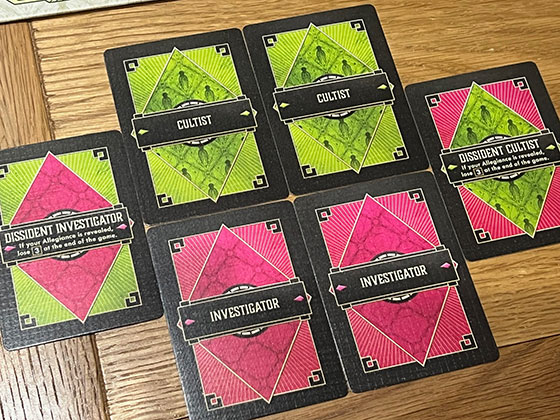
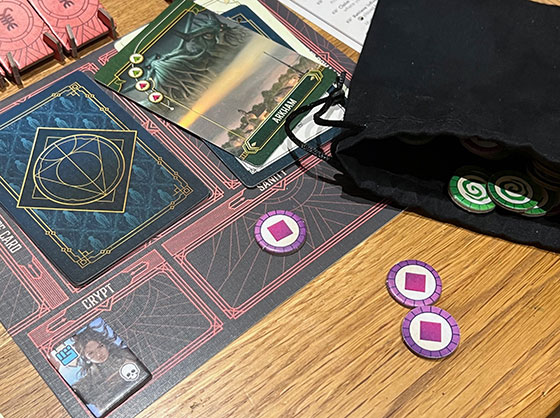
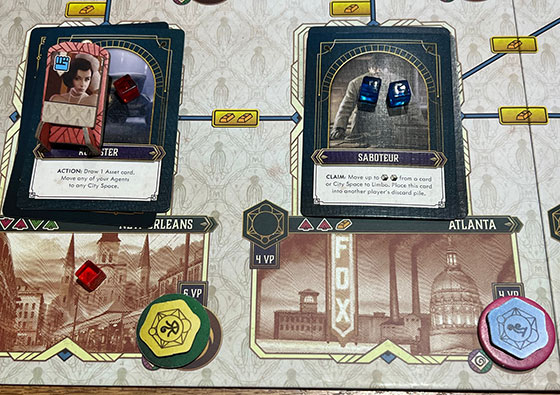
The addition of the Dissident faction is one of the smartest design choices. In A Study in Emerald, the binary Loyalist vs. Restorationist structure could sometimes lead to predictable alliances. Here, the Dissidents muddy the waters. They’re not aligned with either side, and their goals often involve maintaining instability or preventing either faction from gaining too much control. Their presence makes the table talk richer, the accusations sharper, and the endgame more unpredictable.
The game supports one to five players, and while it’s clearly designed for the social tension of three to five, the solo mode is surprisingly robust as well. It reframes the hidden‑role structure into a puzzle of managing threats and interpreting AI‑driven actions, turning the game into a kind of strategic investigation. It’s not the same experience as the multiplayer version, but it captures the sense of paranoia and pressure in a different way. For me, this is realistically a solo game or one for four or five players, with the weakest gameplay definitively at two and then three.
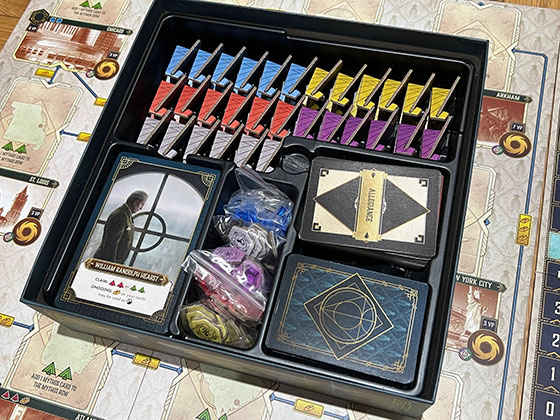
The production quality is what you’d expect from CMON: strong artwork, clean iconography, and components that support the theme without overwhelming it. The art deco style is a perfect fit for the period, and the depiction of the Mythos as a corrupting influence rather than a physical presence gives the game a distinctive identity within the crowded Lovecraft genre.
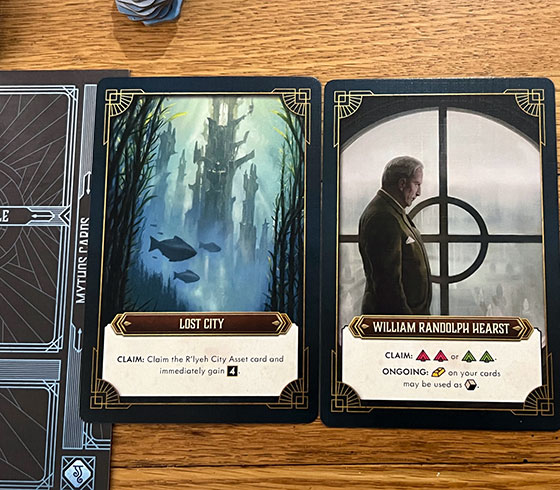
What makes Cthulhu: Dark Providence compelling is how it blends mechanical clarity with thematic ambiguity. The rules are straightforward, the deck‑building is intuitive, and the actions are easy to parse — but the meaning of those actions is always uncertain. You’re constantly reading the table, second‑guessing motives, and trying to decide whether someone’s move is helpful, harmful, or a carefully staged misdirection. It’s a game that thrives on doubt, and it uses that doubt to create tension without resorting to randomness or chaos.
For players who enjoy hidden‑role games but want something with more strategic depth, or for fans of deck‑building who want a game where the cards matter as much for their social implications as their mechanical effects, Cthulhu: Dark Providence is a standout. It’s a thoughtful reimagining of a cult classic, a clever fusion of political intrigue and cosmic horror, and a rare Lovecraft game that understands that the scariest monsters are the ones you can’t quite see.