
‘Witchboard (2024)’ Review
Stars: Madison Iseman, Aaron Dominguez, Mel Jarnson, Charlie Tahan, Antonia Desplat, Jamie Campbell Bower, David La Haye | Written by Greg McKay, Chuck Russell, Kevin Tenney | Directed by Chuck Russell
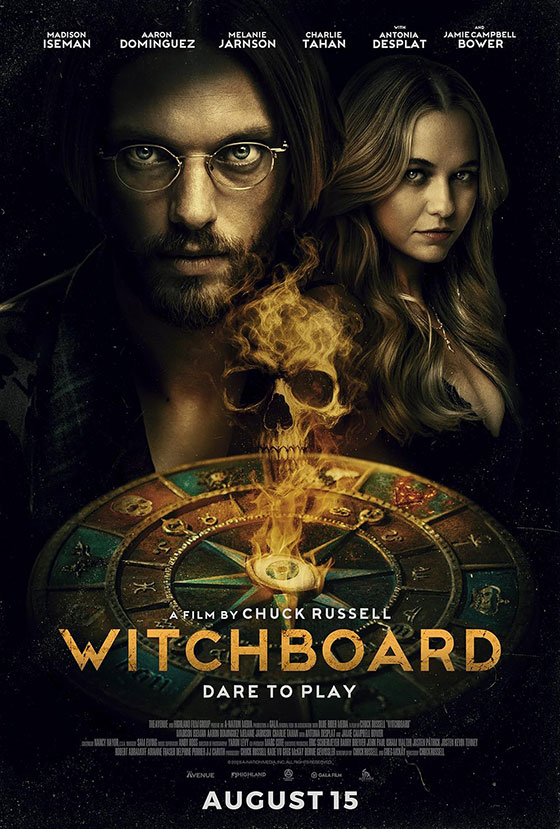
Directed by veteran horror filmmaker Chuck Russell (A Nightmare on Elm Street 3: Dream Warriors, The Blob), Witchboard resurrects the cult 1986 supernatural thriller for a modern audience, complete with a glossy production polish, striking visuals, and a few new narrative twists. Fronted by Jamie Campbell Bower (best known as Vecna from Stranger Things), this remake aims to blend classic occult chills with contemporary studio horror style… though the results are a mixed but intriguing bag.
The film’s story relocates the supernatural mayhem to New Orleans, following a group of ambitious friends preparing to open a boutique restaurant in a refurbished building. During renovations, one of them stumbles upon a mysterious witchboard in the nearby woods and decides to bring it in as a decorative centrepiece. Unbeknownst to them, the board has a dark past – once used in real witchcraft rituals and tied to a centuries-old coven, it was recently stolen from a museum before finding its way into their hands. Naturally, when the group begins meddling with it, strange forces awaken, leading to a chain of eerie and deadly events that threaten to consume them all.
From the outset, Witchboard impresses with its slick visual presentation. Russell’s direction ensures a steady pace and a high level of cinematic craftsmanship. The cinematography captures New Orleans with a moody, gothic beauty: candlelit hallways, misty courtyards, and ornate restaurant interiors drenched in amber tones. The early supernatural touches are especially effective, from ghostly reflections in kitchen equipment to subtle, creeping distortions that hint at something malignant stirring beneath the surface.
The first major death scene is a standout moment, cleverly staged to appear accidental yet undeniably supernatural. It sets the tone for what could have been a tightly wound modern ghost story. The special effects, often criticised in comparable mid-budget horror films, hold up surprisingly well here. While CGI is certainly used, it’s integrated with care, and Russell’s seasoned approach prevents the visuals from feeling cheap or cartoonish.
Jamie Campbell Bower enters the film about halfway through as Alexander, a mysterious occult scholar with ambiguous motives. Bower’s performance is both magnetic and unsettling; his measured delivery and enigmatic presence add gravitas to the film’s second act. Accompanying him are his eerie triplet companions whose matching appearances and ritualistic mannerisms create some of the movie’s most visually memorable sequences. These touches of surrealism and stylistic flair help distinguish Witchboard from more conventional horror remakes.
The production design throughout is rich and detailed. From the rustic restaurant setting to the flashes of 17th-century witch trials in haunting flashbacks, the film feels well-realised and atmospheric. Russell clearly understands the genre’s aesthetics, balancing classical gothic elements with modern sensibilities.
However, the film’s weaknesses begin to surface as the plot unfolds. While the setup is strong, the storytelling gradually becomes more chaotic. The tone shifts from eerie and suspenseful to increasingly exaggerated and bombastic. By the final act, the once-controlled supernatural tension gives way to over-the-top set pieces involving full-blown demonic manifestations and frenzied action sequences. What begins as a chilling mystery ends up leaning too far into spectacle, losing much of the psychological unease that the first half establishes.
The writing is where Witchboard struggles most. Character motivations often feel inconsistent or underdeveloped. Decisions are made that defy logic, and several key twists rely heavily on coincidence or, as the film insists, “fate.” Unfortunately, this explanation feels like a convenient narrative shortcut rather than a meaningful theme. Flashbacks to the 17th century add some depth to the mythology but also raise more questions than they answer, leaving certain character arcs feeling incomplete.
Our main protagonist, Emily (Madison Iseman), is particularly problematic. Despite being positioned as the emotional core of the film, she comes across as unsympathetic and self-centred, even before any supernatural influence takes hold. Her relationship with her partner lacks believable chemistry, which undermines some of the emotional stakes in the later scenes. By contrast, her male counterpart fares better, offering a more grounded and relatable performance. The acting overall is solid across the board, but the script’s limitations prevent the characters from feeling fully fleshed out.
By the film’s climax, Witchboard devolves into something of a supernatural free-for-all, visually exciting but narratively muddled. The final sequence, meant to serve as a shocking conclusion, instead feels rushed and confusing, weighed down by questionable motivations and excessive CGI. Still, there’s no denying that Russell knows how to stage a memorable finale; even when the story falters, the film’s energy and atmosphere carry it through.
In the end, Witchboard is an entertaining yet uneven remake. A visually rich supernatural thriller that delivers style and tension but stumbles when it comes to substance. Fans of glossy, popcorn-friendly horror will find plenty to enjoy in its aesthetics, set pieces, and performances, especially from Bower. Yet it ultimately fails to capture the eerie charm and raw tension of the 1986 original, which remains the more memorable and atmospheric version of the story.
*** 3/5
Witchboard is out now.