‘The Madness of Humpty Dumpty’ VOD Review
Stars: Emily Webber, Callum Preville, Alina Desmond, Ivan Wilkinson, N Walters, John Eccles, Rebecca Phillipson, Maureen Casey, Elena Blichfeldt | Written by Harry Boxley | Directed by Daniel Yates, Zach Van Den Burgh
The Curse of Humpty Dumpty was a tremendous low-budget horror that used the genre as a metaphor for mental health and growing old. Led by a stellar performance by actress Nicola Wright, the film is, at least for me, still one of the best examples of not only British horror but of the work of writer/director/producer Scott Jeffrey/Scott Chambers – who many people will now know as the man behind the Winnie the Pooh: Blood and Honey films, and the entire “Pooh-niverse” of children’s storybook horror.
Thankfully, whilst The Curse of Humpty Dumpty was, obviously, linked to the nursery rhyme, it has nothing to do with the story of a broken egg. In fact, in the original film – and the now-franchise that followed – Humpty is more of a puppet/mannequin brought to life. The first film used his appearance for a film that was, and still is, a powerful look at dementia and the impact it has on sufferers and their families. All wrapped up in a film that makes you question whether ANYTHING we’re seeing is real.
Sadly, the sequel jettisoned the ambiguity of Humpty and instead made him into somewhat of a Pinhead-style demon (who looks more like Pennywise from IT), called from hell to generic, pick off a group of “terrible teens” one by one in what was little more than a slasher movie. There were some pluses to that one – in particular a formulaic plot twist that was handled in any other way than formulaic – but it paled in comparison to the first film.
Which brings us to The Madness of Humpty Dumpty.
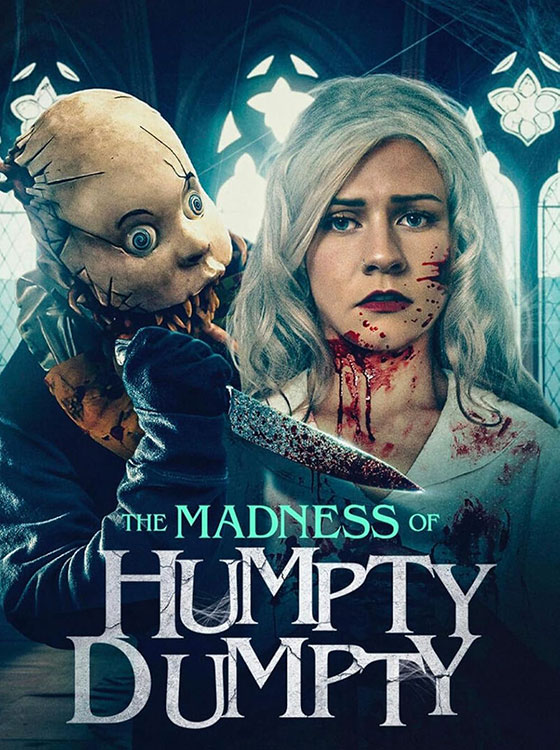
This time round, like Jack and Jill 3, the reins have been handed over to Champdog Films and producer Louisa Warren who take things back to the first film in a story that sees a young woman, Bailee (Emily Webber), suffering from early onset schizophrenia begin to experience unnatural occurrences with a strange doll after moving back to her childhood home in the countryside. A home in which her mother had been plagued by mental instability, and whose childhood was scarred by a friend named Henry who took his own life. Oh, and did I mention she used to have Humpty as a childhood toy?
Of course, all of that screamed, at least to me, a return to the themes of the original film, where reality and fiction blurred and the truth of the situation never really came to light. And thankfully, I was right.
Oddly, whilst Daniel Yates is solely credited on IMDb, the film also credits special effects artist Zach Van Den Bergh (Andor, The Conjuring: Last Rites) as co-director. I would definitely be interested to hear how Berg was involved… Perhaps he shot all the effects work? It would explain the co-credit given that this film is packed with effects, not just the titular character, but also the way the filmmakers visualise Bailee’s mental state. Nevertheless, whoever directed this film deserves credit, along with screenwriter Harry Boxley (Mary Had a Little Lamb, Cinderella’s Curse), for returning this sequel to the roots that made the first film so great.
Yes, The Madness of Humpty Dumpty successfully brings the series back to a solid mix of psychological tension and traditional horror. Here Humpty feels more like a symbolic extension of Bailee’s trauma and guilt, as the film explores inheritance – both genetic and emotional. And by returning home, Bailee is confronted not only with her mother’s illness but also with the unresolved fallout of Henry’s death – which is never fully explained (did Humpty kill Henry or not?), but the ambiguity works in the film’s favour, allowing the audience to project their own unease onto the mystery.
Then there’s the supporting cast of characters. Bailee’s boyfriend Tom (Callum Preville) seems both caring and duplicitous – from the get-go suspicion is cast on him. Is he giving her the correct pills for her condition, or is he driving her to madness on purpose, compounding Bailee’s sense of confusion and isolation? Then there’s Officer Fulton (Ivan Wilkinson), whose connection to Henry brings a personal hostility toward Bailee, which is brilliantly used to blur the line between persecution and paranoia: are the police truly out to get Bailee, or is her fractured state magnifying the problem?
Much like The Curse of Humpty Dumpty, the doll – whilst essential to the horror of the story AND the film – becomes a metaphor through which family secrets, guilt, grief and even hatred materialise, creating a film that is as much about personal demons as supernatural ones.
****½ 4.5/5
Brilliant, but not quite as good as the original film (though the sting in the tale here is ingenious), The Madness of Humpty Dumpty is available to rent/buy on Amazon Prime or stream for free on Tubi and YouTube, now.