From Shareware to Billions: The Incredible Rise of Free-To-Play Gaming
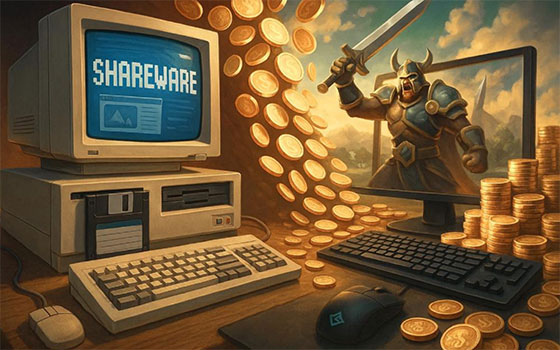
Remember when ‘free-to-play’ meant a bad demo? Those days are long gone. The concept, which began as a way to stop people from stealing games, has grown into a $111 billion monster that has completely changed how games are made, sold, and played. This is the inside story of how free games conquered the world and whether that’s actually a good thing.
What Are F2P Games?
What a free-to-play game really means is that you can download it and start playing it right away without having to pay anything. The main parts of the game are all unlocked, including the story missions, competitive matches, and the main gameplay loops.
As for the clever part, these games are brilliantly made digital markets. The price of a box doesn’t bring them any money. They make huge amounts of money by adding things that aren’t required but are often very tempting on top of the free base. This is the core loop for everything from mobile puzzle games selling power-ups to competitive shooters offering battle passes and even ProgressiveSweepSlots leveraging a community-powered jackpot. On sweepstakes casino games, players can win real prizes without having to invest any money.
The Shareware Era: ID Software’s ‘Doom’ and a Glimpse of the Future
Free-to-play was planned in the business networks of the early 1990s in the United States. This was a long time before battle passes and digital storefronts. The pioneers? ID Software and Doom. Shareware was their smart move. They gave away the whole first episode of Doom for free, which has nine levels of demon-blasting fun. It was easy to get from a friend or a new BBS, and you could play it for as long as you wanted. There’s no catch.
It wasn’t just a test. They gave away a whole third of the game as a surprise strategy move. Someone who was really into it would mail-order the registered version for about $50 to get the last two episodes. ID Software got rid of the publisher, worked directly with players, and kept almost all of the money they made. But it wasn’t just the business model that showed us the future. It was also about the culture it built. That free shareware episode turned into the best marketing tool ever, going viral at LAN parties and becoming a classic in PC games.
Solving Gaming’s Biggest Headache: How F2P Conquered Piracy
For decades, piracy was the monster under every publisher’s bed. Why pay $60 for a game when you could get a cracked copy for free? It was a losing fight, especially in regions where that price tag represented a week’s wages. The industry tried everything. Complex DRM, serial codes, and even lawsuit threats. But nothing worked. Then a thought came to mind: If you can’t beat them, outsmart them.
The free-to-play model not only lowered the price, it wiped it out completely. The obstacle to entry was gone. Pirates had nothing left to steal because the game was already free. There was no shiny disc to copy, no program to crack. The game’s value shifted from code to real services, community, and online experience. Now it wasn’t a matter of whether to buy or steal. You could play or not. And millions chose to play. This was a nuclear option against piracy. Developers finally got rid of theft by giving the game away for free, and paid well, too.
The Asian Innovation: Nexon, MapleStory, and the Razor-Blade Model
The West was still stuck on discs and shady DRM. But in South Korea, a change was coming. When publishers like Nexon saw how many people were stealing games, they thought: What if we just gave the games away?
Enter MapleStory, a side-scrolling MMORPG you could download and play for free. There was no sign-up fee, no one-time fee, and no material behind a paywall. How did they get that cash? They got what’s called the “razor-and-blades model.” It’s given away for cheap (or in this case, free) so that you can use it. Selling the blades, which are high-margin items that keep the experience going, brings in regular income.
For Nexon, the “blades” were cosmetics. They sold outfits, hairstyles, and movements that made players stand out. These things didn’t make players stronger. They just made them custom. This model did not fight theft. It made it meaningless. Why bother with an offline, stolen copy when the real value was in the active, connected community and the sought-after things that showed where you fit in it?
The Modern F2P Playbook: Battle Passes, Skins, and Living Games
Today’s Free-to-Play market is worth $63.98 billion. Titans like Fortnite, Apex Legends, and League of Legends weaponised the F2P model. It’s all about creating a living game, a service that constantly evolves. The entire economy revolves around two core pillars:
- The Battle Pass – This is the modern replacement for the traditional expansion pack. For a small upfront fee, you unlock a tiered ladder of rewards. As you play and complete challenges, you earn everything from new skins and emotes to in-game currency. The more you play, the more you earn, reinforcing your investment in the game world. Miss a season? FOMO kicks in.
- The Cosmetic Shop – Just as Spotify profited from creating custom playlists, games enabled players to directly purchase specific skins, weapon charms, gliders, or emotes. These items are purely cosmetic, but they tap into our desires for self-expression and status within a game’s community. Want to show you’re an elite player? There’s a skin for that.
The Verdict: Is Free-To-Play Here to Stay? (Spoiler: Yes)
The model is far too profitable, far too accessible, and far too embedded in how we play to ever go away. The genie is not going back in the bottle. The journey from Doom’s shareware experiment to the live-service giants proves this isn’t a fluke. It’s an evolution. F2P solved piracy, tapped into global markets, and created evolving worlds that boxed products never could. Love it or hate it, its effectiveness is undeniable. The future of F2P won’t be defined by its existence, but by its execution. Will developers continue to embrace fair models built on cosmetics and battle passes? Or will they slide further into pay-to-win mechanics that prioritise short-term profit over community trust?