
AI and Copyright – Grand Theft Data
By Peter Stead
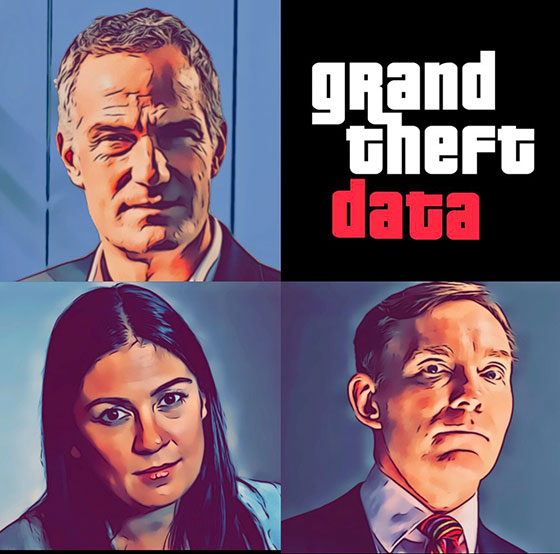
Following on from my article about the Government’s latest moves to destroy copyright – and, in turn, the creative industries – to help Multi-Billion/Trillion Dollar Tech Companies become even wealthier, I thought it would be fun if we played a bit of bullshit bingo with the Pro-Theft Lobby’s main arguments to allow this to happen:
The law is unclear on AI and Copyright
At one stage, this was the Government’s mantra. This was so obviously ridiculous that not only did the Government drop this line, Peter Kyle, the Secretary of State for Science, Innovation and Technology tried to gaslight everyone he never made this claim. But the internet, as they say, never forgets.
Legal academics state that UK Law is clear. Text and Data Mining involves making copies. If you do not own the copyright you do not have the right to make a copy – unless you have been given permission, or a legal exemption applies.
It should only be copyright infringement if the end result resembles a specific work
So now we are clear on how UK copyright law works, the Pro-Theft Lobby generally moves onto how they wish the law worked.
Copyright infringement occurs when a copy is made without permission that prejudices the copyright holder’s legitimate exploitation of their own material. This is embedded in the three-step test at the heart of international treaties such as the Berne Convention, WIPO and TRIPS. This encapsulates a Capital T Truth – it is wrong to deprive a copyright holder’s way of making a living by using their stuff without permission. And it should stay that way.
Some other AI Myths that just won’t die…
AI is disrupting the creative landscape the same way the invention of photography did
Photography takes pictures of the same things as paintings. It does not take pictures of the paintings, which is, by analogy, what AI does. It takes a temporary copy of your painting, or novel, or whatever – and trains on it.
People objecting to copyright changes that favour AI “resist change”
Peter Kyle tried this one as well. This issue has nothing to do with “resisting change”. If you want to use AI, use it. But its training data has to be mined lawfully and ethically. Licensing is a way to achieve this and solutions are already being supported to this end, most notably by Ed Newton-Rex through his non-profit Fairly Trained.
AI is everywhere, you can’t stop it
This bad logic is the final roll of the dice for the Pro-Theft Lobby. At this point, they have stopped denying any of the negative effects of copyright infringement on copyright holders. They now want you to perceive the whole issue as an unsolvable problem that we just have to live with.
But here’s the thing.
Pollution is also everywhere, but does that mean we do nothing to stop it? Or do we just accept our food with a side order of micro-plastics? No. Pollution can and will be stopped. As will its digital equivalent – AI Slop, bit torrented from copyrighted works, a process which, by the way, also uses gargantuan amounts of energy and water.
Bonus Round: “Adapt or Die”
The Pro-Theft Lobby now finally reveal their true character through their use of fear tactics. I see it all the time from random individuals on social media, and it throws up an important question:
If AI gives you the edge, why do so many of its users proselytise? Why do they not just quietly use AI and reap the benefits of this “edge” they say it gives them over non-AI users? I imagine it’s the kindness of their hearts…they just don’t want you – a complete stranger – to lose out.
In terms of “adapting or dying” I would rather “die” than “adapt” to a reality where I buy stolen data – which includes my own – to churn out low effort, derivative crap to add to the slop-saturated market that was once a thriving cultural exchange. None of the above Pro-Theft Lobby arguments make any sense and it just underscores the reality that, no matter how big a problem AI has with hallucinations, that is nothing compared to the cognitive dissonance of many of its advocates. No matter how you spin it, Text and Data Mining for commercial purposes without permission is copyright infringement.
It’s a form of theft, pure and simple.