
‘Director’s Cut’ Review
Stars: Tyler Ivey, Haley Cassidy, Louis Rocky Bacigalupo, Greg Poppa, Brandy Ochoa, Louis Lombardi, Darrin Hickok, Danielle Kotch, Lucy Hart | Written and Directed by Don Capria
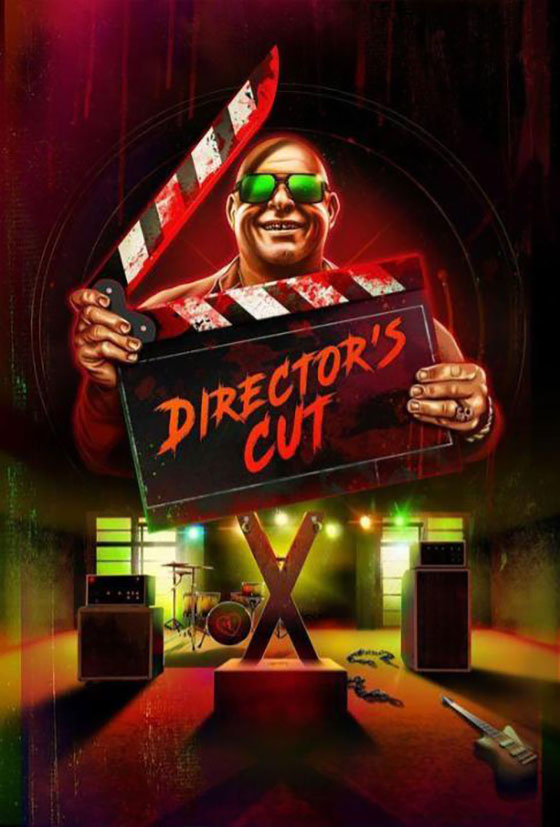
The horror genre has long embraced the trope of bands retreating to remote locations to work on new music, record albums, or shoot videos, often with terrifying consequences. Films like Rock ‘n’ Roll Nightmare, PussyCake, and Blood Tracks have paved the way in this subgenre. Now, writer/director Don Capria (Relationshit, Anecdota) brings his own spin to the concept with Director’s Cut – not to be confused with the 2016 Adam Rifkin/Penn Jillette film of the same name.
Capria sets the stage intriguingly: a title card informs us that The Suicide Disease — the film’s fictional band — disappeared in the spring of 2024. We’re then introduced to Jay (Tyler Ivey), the band’s frontman, as tensions bubble up between him and his girlfriend Jen (Haley Cassidy). Internal conflicts among bandmates Juan (Louis Rocky Bacigalupo), John (Greg Poppa), and Menace (Brandy Ochoa) hint at deeper fractures within the group, all stemming from an unspoken scandal involving a mysterious death.
Facing pressure to revitalise their reputation, the band grapples with the decision to shoot a new video, despite tight finances. Fortuitously, an aspiring director (Louis Lombardi; The Sopranos, 24) offers his services for free, thanks to their manager AJ (Darrin Hickok; Devil’s Five, Triassic World). What could possibly go wrong?
The group, joined by Jen and Val (Danielle Kotch), heads into the eerie backwoods of Pennsylvania. Although we know from the outset that The Suicide Disease’s story ends in tragedy, Capria keeps the audience engaged by focusing on the group’s dynamics and building a steady, unsettling tension.
Fans of films like Saw will appreciate Director’s Cut’s embrace of a morality-laced body count. While the story leans more into character-driven conflict than traditional jump scares, it succeeds in creating an atmosphere of inevitable dread. Capria’s decision to reveal the identities of the antagonists early on – Mister Director and his unsettling assistant Babs (Lucy Hart) – shifts the focus from mystery to an unnerving game of survival.
The cast delivers strong performances that enhance the slow-burn tension, allowing viewers to invest in the band’s fate even as the walls close in. Lombardi, in particular, brings a compelling creepiness to his role, blending charm with menace. Hart’s portrayal of Babs adds another layer of discomfort, further destabilising the film’s reality.
Visually, Director’s Cut makes great use of its rural setting, capturing the isolation and claustrophobia of the band’s situation. The cinematography subtly underscores the growing paranoia without relying on cheap tricks, and the pacing, though deliberately slow in parts, serves to heighten the final act’s impact.
While Director’s Cut may not be a rollercoaster of relentless scares, its blend of psychological tension, character drama, and horror makes for a fresh and absorbing experience within a well-worn subgenre. Capria proves he’s unafraid to take risks, delivering a film that lingers in the mind well after the credits roll, making this a thoughtful, atmospheric addition to the horror genre. And fans of character-driven horror will find much to appreciate in its slow, suspenseful burn.
***½ 3.5/5
Director’s Cut is out now on all (US-based) digital platforms. Miracle Media will release the film digitally in the UK on November 3rd.