
Drama in Crisis? ‘Adolescence’ and the State of the Industry
Written by Dom Lenoir of The Filmmakers Podcast
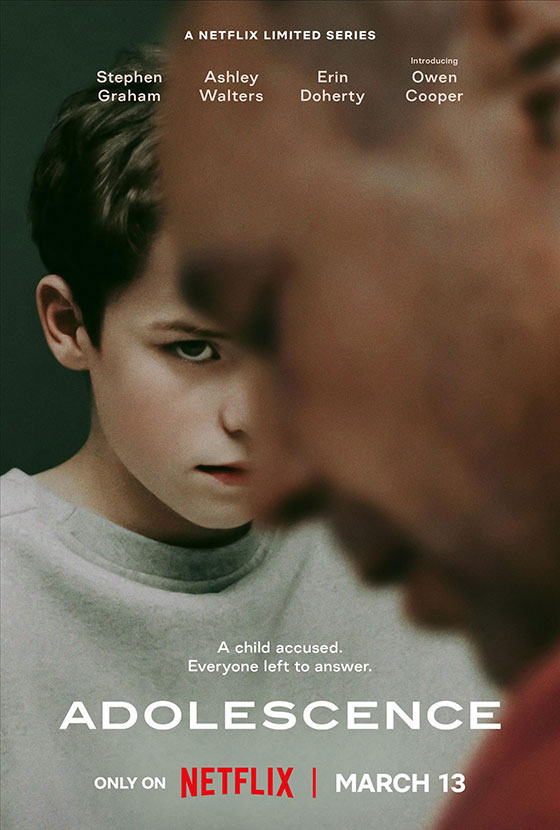
There’s no doubt that Adolescence is a massive success. What started as a pitch for another “one-take” concept, following the success of Boiling Point, has quickly turned into a cultural phenomenon and international hit.
So, what is behind the new Netflix show’s meteoric rise? Is it the concept, or just a fad? Perhaps it really is just great “drama.”
I had the pleasure of talking to some of the talented creatives behind Philip Barantini’s latest hit, Adolescence, last week. I started by chatting with Stephen Graham and Erin Doherty. The buildup to the interviews can be a slightly nerve-wracking experience as you wait silently in a bustling hotel corridor in London, with teams of PR and personnel spread across many rooms, before being thrust into the lights and cameras where your interviewees are waiting. As a filmmaker, I am certainly more at home on the other side of the camera, but any sense of nerves soon dissipates when you step into the room with such down-to-earth people and connect over a love of film and TV.
Erin, who in episode 3 certainly delivered some of the most complex and compelling acting I’ve seen on TV in recent years, was quick to celebrate Stephen and the wider team for bringing her onto the project, following a successful collaboration the pair had on A Thousand Blows. Stephen’s praise was equally deferential towards Erin’s work, and they both took the time to champion the breakout performance of the “accused teenager” actor, Owen Cooper. And rightly so: the fact that he can act at that level at any age is impressive enough, but for a debut, it is incredible to see someone so focused, nimble, and explosive.
We spoke about the project’s humble beginnings, which seemed to originate with Stephen reading an article on a female victim of knife crime. We soon got into the building of the team and how to manage a project like this successfully. “Footie team” was a phrase used a few times, and more than anything, the idea of putting aside too heavy a notion of “hierarchy” and replacing it with the concept that no small part is too small, whether it be cast or crew. It’s a system that fosters supporting each other and producing good work. It also makes sense because when a take could last an hour with so many points to hit for so many cast and crew members, a 10-second background part has the same importance as a lead role if something goes drastically wrong.
I thought the show was great, both from a technical standpoint and in the writing, but the layers of acting it showcased aren’t something you get to see every day.
There were many standout moments, such as the long van journey to get paint with the family trying to put on brave faces months after the arrest, or the incredible intensity of episode one’s central incarceration scene, or Stephen’s harrowing finale monologue in his son’s bedroom. But as a whole, it was certainly episode 3 that really stood out for me.
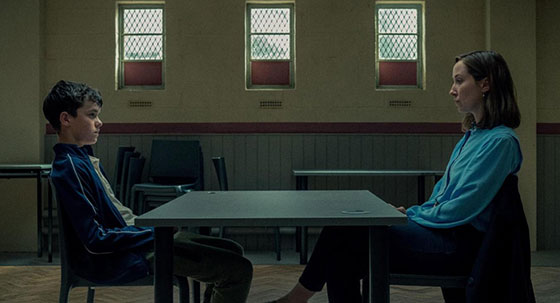
There’s some interesting preamble beforehand, but the meat of the episode is the child psychologist interview between the accused and the psychologist. The push-pull power dynamic between Erin and Owen throughout the episode is a masterclass in acting. Both are reacting in real time to one another, leading seamlessly from one beat to the next. Owen shifts from quiet and engaged to the threat of violence, right on the edge, and Erin flits between coaxing Owen to open up, holding her ground, and pushing back to assert herself under extreme duress. One of the most impressive moments is when Owen has completely lost his cool, and Erin has to come back in, conquering her fear to reassert that she won’t be intimidated. The energy in the air is palpable when she slides her chair back in and faces Owen down.
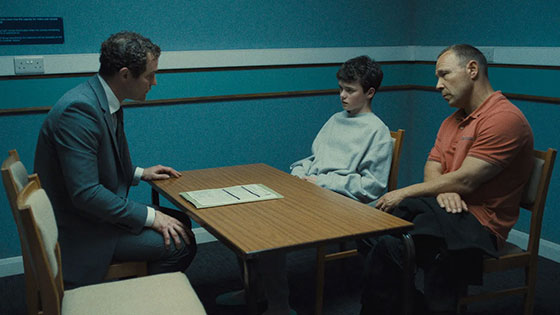
Stephen talked about getting into a Zen state for the extremely long takes, and it does seem that when executed this well, there is an effortless feel to the acting, where they are not micromanaged but allowed to embody their roles and react in real time to each other’s lines and actions.
So, how did we get to the convergence of so many brilliant talents? What seems to unite everyone is a no-fuss approach to telling stories about everyday people, trying their best to live good lives and often met with unfair struggles. It isn’t just that these characters have to go through unimaginable challenges; it’s that they feel like the kind of people who certainly don’t deserve it, and they feel like people we might know or have met. Stephen Graham is no stranger to powerful and thought-provoking stories, and neither is Jack Thorne, with collaborations on the devastatingly raw limited series The Virtues (which also features an unforgettable performance from Stephen and Irish acting legend Niamh Algar), as well as This Is England and The Help, to name a few of their hard-hitting collaborations. Then you have Philip Barantini, who impressively cut his way through the crowd and arguably got the most notice for Boiling Point and his infamous “one-take” kitchen pressure cooker.
Sure, jumping into a constantly moving camera for the first time was a fantastic moment for the audience to enjoy, and it certainly did generate a lot of buzz. But, as Philip so aptly stated with Adolescence, the one-shot concept cannot be there simply as a gimmick. The camera creates the tension and pace, but it’s the stunning, multileveled acting and writing in drama that immerses us and keeps us transfixed throughout the four parts of this fantastic new show.
Speaking to Philip and Jack, the football team metaphor was again mentioned when we started chatting about working with the wider team and the actors at the heart of the show. It seemed like such an obvious yet sensible approach to handling these kinds of sensitive topics. It’s a set of many cogs working together in harmony, with no one star player hunting for glory. There is no overbearing force behind Philip’s directing; instead, there is a proper sense of collaboration and a man whose focus is on letting people try things, letting them fail, and seeing what brilliance people can achieve when they truly work together toward a common goal. Jack’s ability as a writer to capture people from all walks of life so naturally speaks equally to his talent at fitting into a wider team, and you can see this from the scale of his work and the number of co-writing credits he has amassed across different types of stories and filmmaker teams.
Masks are a concept discussed with Philip and Jack. It’s something we see in episode 3, but also right from the start, in episode 1, with our two officers brilliantly played by Faye Marsay and Ashley Walters, who we meet as everyday colleagues, with quirks, bad habits, and families. We soon must witness them slip into the role of unflinching arresting officers breaking a family apart.
There are many themes in Adolescence that have been widely discussed – knife crime and the effect it has on the family. But what has made this such a unique conversation starter is its approach to look at the perpetrator’s family, as well as the context and societal factors (such as incel culture and the effect of bullying) that led to a seemingly normal child with a loving family committing murder.
The main thing I took away from chatting to Jack and Philip was that they share the same grounded approach to work, without hyperbole or glory, but focused on real, feeling stories. The refreshing ethos that seems to be a hit among the whole team is that, despite the complexity of the show’s ambitious subject matter, everyone was allowed to try new things and even fail. We ended up finishing the interview, and as a nice reprieve from the intense subject matter, we all laughed at the “footie photo” moment, finishing with a group photo. It’s nice to meet people who you feel you could meet at your local playing field, pub, or café — people who don’t have any of that “us and them” sense. In an industry where gatekeeping, sometimes necessary but many times not, is so commonplace, it’s great to tap into this shared love of storytelling.
So, we can safely acknowledge this as a hit. Drama CAN be popular, drama can be a commercial success, and in the case of AdolescenceAdolescence, a show that is incredibly British, has transcended the Atlantic and hit home in the USA and internationally as well. Maybe it’s not as widespread in its international reach, but look at Mr. Bates vs. the Post Office or Toxic Town — there is an audience for hard-hitting stories about real people. So why is the term “drama” treated like a poisoned chalice in today’s film and TV industry?
It’s always been hard to get good drama made, but conversations this year on the wider topic of drama have been met with the common theme – “Drama isn’t difficult, it’s impossible.” Casting doesn’t mean what it used to; sales agents are more risk-averse than ever, and the term “execution dependent” is thrown around a little too regularly.
For Philip Barantini, you can certainly agree he earned his breaks. It would be hard to argue that any of those involved in this show are not deserving of a huge measure of success. But where does that leave filmmakers hoping to succeed in the medium? Hoping for a slim chance with limited grants, niche arthouse funding, or a lucky break? Not everyone with great stories to tell has the buzz or confidence to be immediately “noticed” and yet so many great storytellers fit into that mold of more introverted persona.
I do think it is the quality and determination of teams like these that are keeping drama alive — a beacon shining against the blanket calls for “genre” (I love genre too, by the way). In a world where storytelling of this kind is often seen as high risk, it seems to have been forgotten that stories which make you talk, discuss, and hit you in the gut — like the ones Philip, Jack, Warp Films, Matriarch, and brilliant actors like Stephen are making — are capable of earning commercial success and longevity.
Take away the one-shot concept for a moment, and there is nothing prescriptive here. This isn’t a story or idea pulled out of a hat with popular tick boxes of “what audiences react to.” When we try to manufacture “content” without the personal touch, we end up with a swathe of shows that, despite their best efforts and maybe even great actors, feel flat and somehow insincere in their writing. If we talk in generalizations, sure, it’s an easier sell from development to distribution going for a safer genre offering. But if we look at some of the biggest box office bombs of this year and last, the common theme is often prescriptive filmmaking.
Surely, stories that are lived in, researched, felt, and deeply cared about have more of a chance of resonating with an audience than something created far more by think tank? When good stories are nurtured through development to distribution, and when storytelling, structure, and character are placed above tropes, memorable shows and films are common. Just look at the number of hits companies like Working Title and Focus Features have in the drama genre, or the quality output of HBO. Netflix, to their credit, have recently especially taken an approach to create a few more standout shows and films, rather than catering to everyone with everything all the time, and it does seem like a place for the lucky few to have genuine filmmaking freedom and a chance for bold creative leaps.
In a sea of prescriptive consumerism, it is just a shame that there isn’t more widespread support for this type of drama and the people trying to make it.