
‘The Horrible Dr. Hichcock’ Blu-ray Review
Stars: Robert Flemyng, Maria Teresa Vianello, Barbara Steele, Silvano Tranquilli, Maria Teresa Vianello, Harriet Medin, Lamberto Antinori, Aldo Cristiani | Written by Ernesto Gastaldi | Directed by Riccardo Freda
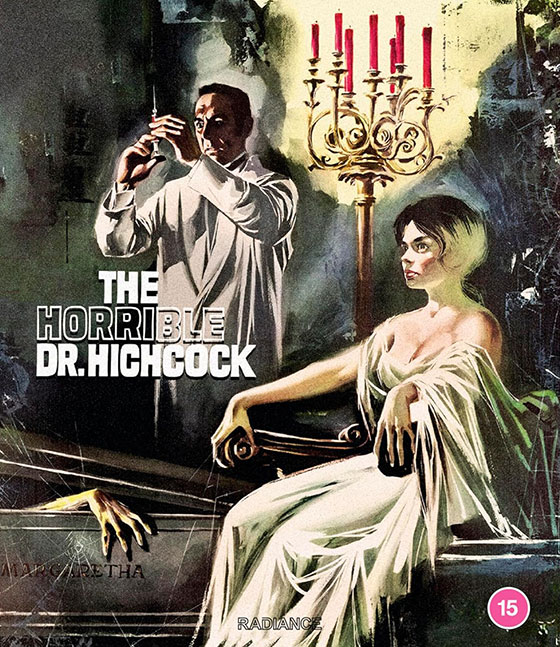
The Horrible Dr. Hichcock, directed by Riccardo Freda under the pseudonym “Robert Hampton,” is a lurid and atmospheric Gothic horror film that exemplifies the Italian cinema’s talent for crafting macabre yet elegant tales during the golden age of Euro-horror. This genre gem, drenched in decadent visuals and infused with a morbidly psychological undertone, manages to unnerve and captivate in equal measure.
The story unfolds in 19th-century London, where the titular character, Dr. Bernard Hichcock (played with unnerving restraint by Robert Flemyng), is a celebrated anesthesiologist with a dark secret: his fetishistic obsession with necrophilia. After accidentally causing the death of his first wife, Margaretha (Maria Teresa Vianello), during a disturbingly intimate experiment with a powerful sedative, Hichcock disappears, only to return years later with a new wife, Cynthia (Barbara Steele), to his foreboding, shadow-drenched mansion.
As Cynthia begins to unravel the mysteries of her husband’s twisted psyche and the eerie presence that haunts their home, the film builds an atmosphere of dread and ambiguity. Is Hichcock truly repentant of his past sins, or is he orchestrating another descent into his perverse desires? The suspense crescendos in a series of hallucinatory and grotesque revelations, culminating in a climax as morbidly operatic as it is visually striking.
Barbara Steele, the undisputed queen of Italian Gothic horror, delivers a mesmerizing performance as Cynthia. Her wide, expressive eyes and ethereal presence perfectly capture the vulnerability and resilience of a woman trapped in a nightmarish world. Steele’s chemistry with Flemyng underscores the psychological tension that drives the narrative, as the latter portrays Hichcock with a chilling blend of charm and menace. Flemyng’s understated performance heightens the film’s unease, making his descent into madness all the more terrifying.
Freda’s direction, complemented by Raffaele Masciocchi’s cinematography, leans heavily on Gothic aesthetics, with grandiose, decaying interiors and flickering candlelight. The mansion itself becomes a character, its winding corridors and creaking doors amplifying the sense of claustrophobia and decay. Freda crafts a deliberate pace, allowing tension to simmer and dread to build organically, though modern audiences might find the pacing languorous at times.
The Horrible Dr. Hichcock also benefits from Roman Vlad’s haunting musical score, which underscores the morbid romanticism at the heart of the story. From melancholic strings to chilling crescendos, the music weaves seamlessly into the narrative, heightening the film’s emotional and psychological impact.
What sets The Horrible Dr. Hichcock apart from other Gothic horrors of its era is its willingness to delve into taboo themes. The film explores the interplay between death and desire, guilt and obsession, with a boldness that was groundbreaking for its time. While the necrophilic undertones are implied rather than explicit, they cast a shadow over every frame, making Hichcock’s mansion feel like a mausoleum of suppressed horrors.
Despite its strengths, the film is not without flaws. The narrative occasionally meanders, and some sequences feel unnecessarily drawn out, diluting the tension. Additionally, while Flemyng and Steele are outstanding, some supporting performances lack nuance, coming across as wooden. The English dubbing, a common issue in Italian films of this era, can also detract from the immersive quality of the dialogue.
The Horrible Dr. Hichcock is a chilling, provocative masterpiece of Gothic horror that combines psychological depth with visual splendor. While its slow pace and dated elements might challenge contemporary viewers, its haunting atmosphere, stellar performances, and audacious exploration of dark themes make it a standout in the annals of Euro-horror. Fans of Barbara Steele and Italian Gothic cinema will find much to appreciate in this sinister and seductive tale.
Special Features:
- New 2023 2K restoration of the film from the original negative presented in the 87-minute Italian version
- Audio commentary by critics Kat Ellinger and Annie Rose Malamet
- New interview with screenwriter Ernesto Gastaldi (2023)
- Visual essay on Bluebeard in gothic film by Miranda Corcoran (2023)
- An interview with Madeleine Le Despencer on necrophilia and taboo gothic (2023)
- Trailers
- Gallery
**** 4/5
After getting a limited edition release in October, The Horrible Dr. Hichcock is out now on standard Blu-ray from Radiance Films.