
Sundance London 2024: ‘Handling the Undead’ Review
Stars: Renate Reinsve, Bjørn Sundquist, Bente Børsum, Anders Danielsen Lie, Bahar Pars | Written by Thea Hvistendahl, John Ajvide Lindqvist | Directed by Thea Hvistendahl
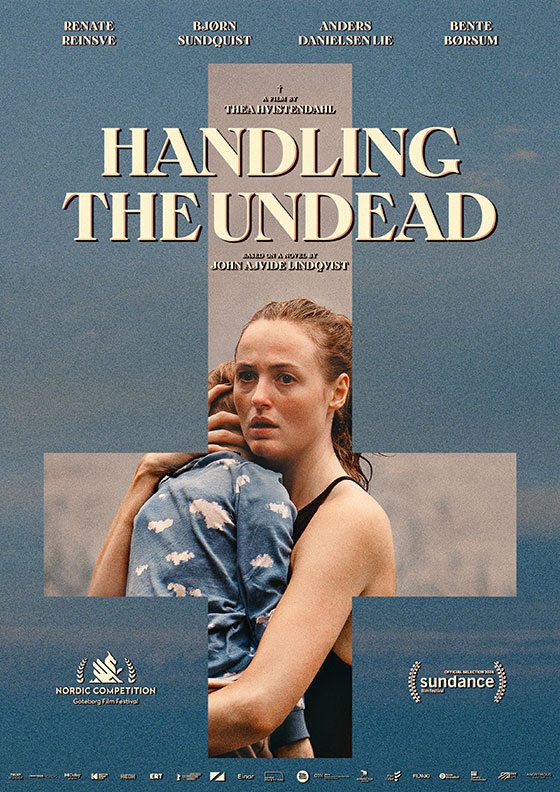
After a strange electrical storm, three separate families in the same Norwegian town find that their relatives — who have all recently died — have come back to live. Trying to navigate how to live with their dearly departed (who, like most zombies, don’t react or engage with anything), each family is confronted by its own sense of grief, loss and love.
If that reads like a loaded synopsis to you, you’re right. Far from the comedic throes of Shaun of the Dead or the traditional horror of Night of the Living Dead, Handling the Undead is a zombie movie we’ve never seen before. Instead of running with terror, thrills or humour, director Thea Hvistendahl chooses to focus on a melancholic sense of brooding. Out of all the zombie films that exist, this is the closest to reality, with Hvistendahl making her viewers sit in the discomfort of an age-old ‘what if’ — what if we could see them one last time?
Hvistendahl’s answer to that question is not as healing as one might hope, but she’s undoubtedly correct in her assumptions. Through one woman’s dead son, another’s dead wife, and a woman who died during the storm itself, viewers are faced with an uncomfortable reality that dealing with the recently deceased is anything but a pleasure. Fading into their own discoloured skin, the dead do nothing other than hang around the necks of those who loved them, bearing a physical weight that brings long-buried tensions between the living to the surface. In truth, it doesn’t take a zombie for two people to hash out hard truths between them, but it’s a satisfying metaphor.
While the characters need the hindsight of things best left buried, viewers need a word of warning – Handling the Undead is incredibly depressing. Instead of cutting through the treacle, Hvistendahl chooses a brooding approach to her storytelling which slowly meanders its way through a sinking sensation of feelings. She’s forcing her audience to sit in the discomfort of her own choosing, and it has a blinding effect. By adding hefty emotional to a sub-genre that’s often relegated to being a visual gag or outdated trope, Handling the Undead creates a beautiful, yet nauseatingly uneasy, sense of introspection.
On the other hand, this means that it’s never going to be a film you want to watch again. Meandering scenes can sometimes follow their own path for too long, akin to being stuck in a cinematic traffic jam with no visible end in sight. Sometimes it’s easy to forget where you started and where you’re supposed to be, with dialogue often sparse and impenetrable. All film is subjective, but Handling the Undead is even more so — it’s safe to assume that a hefty chunk of average moviegoers will not be able to handle this. The movie is a heavy burden that hangs above those who watch, but to persevere with it and ourselves means to be changed forever.
*** 3/5
Handling the Undead screened as part of this year’s Sundance London.